
Let's get together to fight this Holy Armagiddyon,
Bob Marley, One Love/People Get Ready, Exodus, 1977
Soul Rebels,
“Who run this mutha? Girls …”
Run the World is a song on ’s 2011 album 4. It’s a defiant celebration of woman power, not pleading or petitioning for equality, but declaiming and defying; not in the staid language of (men’s) politics, but in the movement of eclectic dance and electropop; not yielding up easy to quote lyrics ... Punk pop. Nefertiti meets Tofo Tofo.
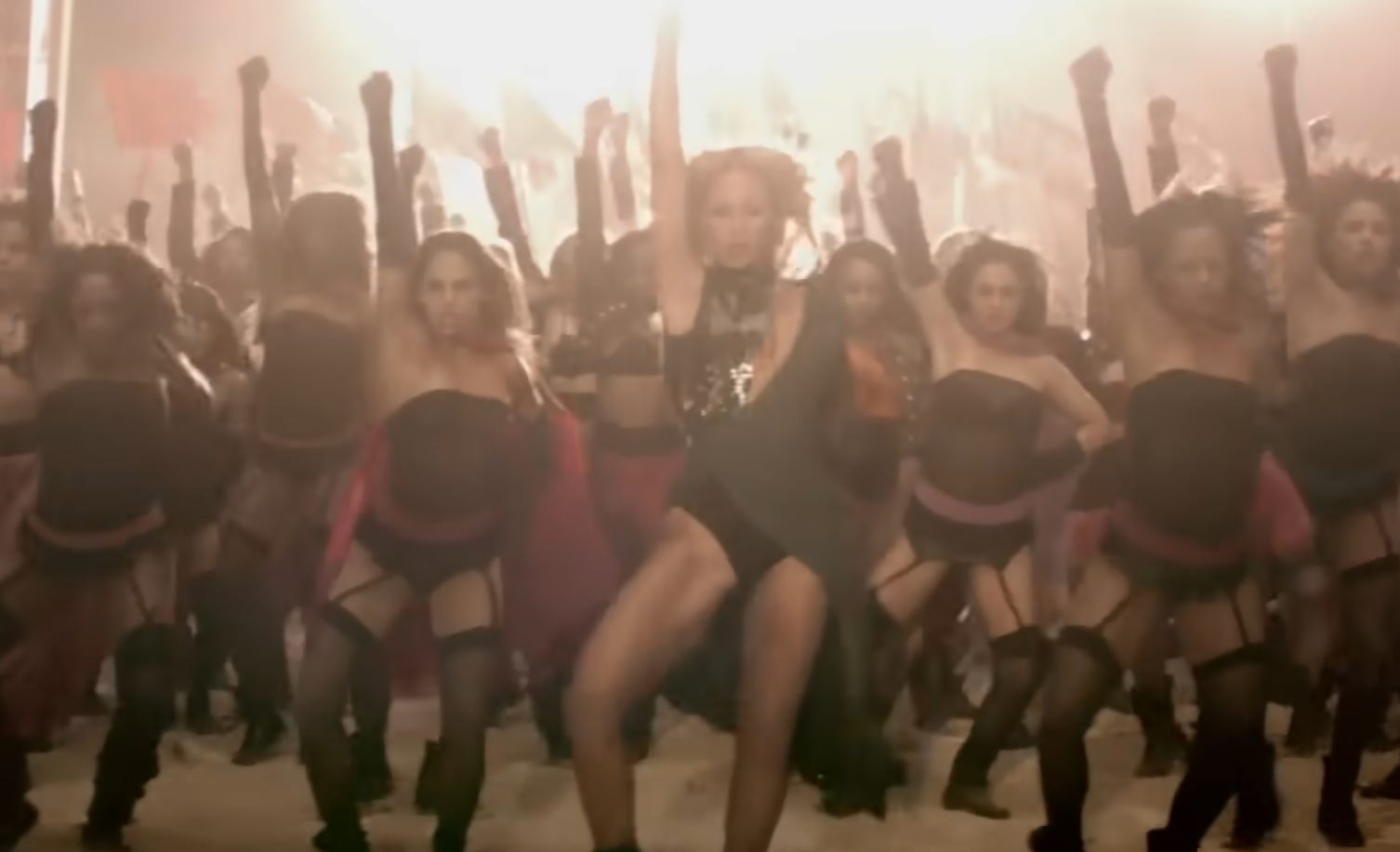
Says Beyoncé:
“Who are we
What do we want?
… The world”
And why not? The rule of men has gone on for too long. Women deserve to run the world.
In South Africa August 9th is Women’s Day. In the political calendar of lip-service-to-really-important-issues-that-on-every-other-day-government-ignores August is women’s month.
It’s tokenistic bullshit, yes. But don’t be lulled into passivity. It’s a good time to dig. To discover. To remember. To revive. To rage.
Women’s Day recalls and celebrates that winter day in 1956 when 20,000 women of all races and classes marched to the apartheid Union Buildings to protest against the extension of pass laws to women.
69 years ago.
Women’s month celebrates women’s power and women’s sacrifice. It reminds us of women like Phila Portia Ndwandwe, abducted and murdered by the apartheid security police in October 1988, and the subject of a painting that hangs in the Constitutional Court.
31 years ago, through the resilience of women’s resistance, apartheid came to an end. Women won freedom … in the eyes of the law. Why then, in 2025, are so few women truly free?
There is gender unfreedom in unemployment.
Unfreedom in murder rates. Unfreedom in hunger.
Unfreedom in pay (if you get it). In education. In respect.
As the state and the formal economy flounders, a parallel economy – the “care economy” – is held up by women. But, as explained in this 2020 report from Oxfam, the women who work in it are not paid for their labour. Dr Basani Baloyi said in a recent speech Making Care Count: A Vision for Inclusive Care Economies Through G20 Leadership: “The care economy is … the foundation upon which all economic activity rests.”
There’s little to celebrate. Yes, important gains that have been made in formal gender equality. Each one fought for. But they are not enough. And now there is global stagnation and erosion in substantive equality.
There is a regime of gender apartheid against women in Afghanistan and Iran. In Gaza women bear the brunt of Israel’s genocide. In the USA, Defence Secretary Pete Hegseth approvingly retweets an evangelical Christian group that thinks women’s vote should be managed by their husbands.
It’s time for a fight.
Watch: Performance colectivo Las Tesis "Un violador en tu camino", a protest song that in 2019 helped inspire a mass movement of women against femicide in Chile.
Thumbs up: Who runs the social justice world?
Every social justice issue is a women’s issue.
Every social justice activist ought to be a feminist.
Women’s equality, dignity and safety is not a woman’s issue.
Read the profiles of sixty of the women who organised the 1956 march.
Their passion did not die.
In recent years a transformation has taken place in social justice organising in South Africa. Now it is overwhelmingly led by women. Women outnumber men three to one in the leadership of civil society.
We salute you: Clotilde Angelucci (Youth Capital), Ferrial Adam (WaterCAN), Basani Baloyi (IEJ), Rachel Bukasa (Black Sash), Tessa Dooms (Rivonia Circle), Sharon Ekambaram (Lawyers for Human Rights), Nicole Fritz (Campaign for Free Expression), Adv Adila Hassim, Fatima Hassan (the Health Justice Initiative), Janet Jobson (Desmond and Leah Tutu Foundation), Ishtar Lakani (strategist), Matshidiso Lencoasa (Budget Justice Coalition), Noncedo Madubedube (Equal Education), Thoko Madonko (economist), Nonhle Mbuthuma (Amadiba Crisis Committee), Koketso Moeti, Salome Meyer (Cancer Alliance), Mbali Ntuli (Ground Work Collective), Karabo Ozah (Centre for Child Law), Tess Peacock (the Equality Collective), Tshekofatso Phala (Equal Education Law Centre), Zuki Pikoli (editor), Kavisha Pillay (CODE), Kaajal Ramjathan-Keogh (International Commission of Jurists), Marlise Richter (all rounder), Lotti Rutter (Ritshidze), Sasha Stevenson (Section27), Sibongile Tshabalala (TAC), Lwando Xaso (lawyer and writer).
And many many more...
Forgive me for leaders I have not named. This is just a sample. We have women leaders in poetry, in journalism, in thought and knowledge production. It would take more words than this short newsletter has space for.
When I asked why a similar revolution has not taken place in the leadership of most other parts of society one activist replied simply: “Men are responsible for upholding a broken capitalist system 😉”
Touché.
Thumbs Down: Nature’s revenge
In women’s month let’s elevate our understanding of the disproportionate destructive impact the climate crisis is exacting on the lives of women and girls.
The madness of King Donald is real. But it’s also a distraction from the real crises facing the world. The climate crisis in particular. Nature is not being stunned into silence by his antics. The opposite.
Join the dots … Record temperatures are being experienced across Europe. Floods in Beijing. Unprecedented wildfires in Canada. Searing days above 50°C in Iran and across the Middle East. A rain bomb in Pakistan killed over 200 people.
And Africa’s under the climate cosh.
The sixth mass extinction is loading.
Activists Unusual: “Ubuntu as a philosophy of revolution”
The lineage of women’s resistance and leadership in South Africa runs long and deep.
Justice Yvonne Mokgoro was only five at the time of the 1956 women's march. An encounter with PAC leader Robert Sobukwe inspired her to legal practice as an instrument to advance equality.
In 1995 she was one of the first two women appointed to South Africa’s brand new Constitutional Court. After a life of unblemished service Yvonne died tragically in 2024.
Listen to this rare interview: Justice Yvonne Mokgoro, African Women in Law Legacy Project
Last week I spent several intellectually rich and beautiful days at the Kromdraai Hub in the cradle of humankind with her children, grandchildren, judges and former judges, artists and activists fathoming out how to ensure her spirit and convictions shape the rest of the 21st century. The Yvonne Mokgoro Foundation is being founded to do that.
One of the philosophies Yvonne injected into constitutional jurisprudence in the first judgment of the Constitutional Court was of Ubuntu, “I am because we are.”
As we deconstructed Ubuntu and its relevance for now, I had an epiphany. Ubuntu is not a fusty, musty, harking back to old times philosophy but an active instruction for community living, solidarity and a home-grown anti-dote to inequality.
We need to reimagine Ubuntu.
Activists bookshelf: Imagine!
Talking about imagination.
A few weeks ago I joined a conversation with the staff of the Trevor Noah Foundation in Johannesburg.
My topic: Making Advocacy effective.
At the end I was given a copy of Into the Uncut Grass (beautifully illustrated by Sabina Hahn), a “picture book, but not a children’s book .. a book for kids to share with their parents and for parents to share with their kids.”
It’s about one of my favourite topics. Imagination.
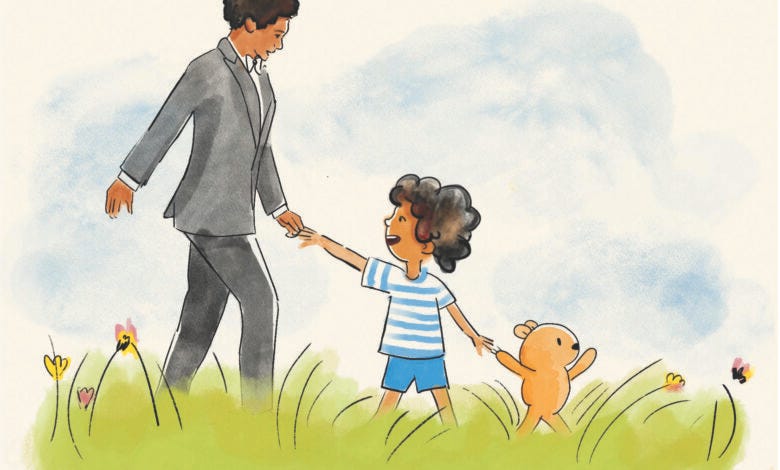
Writes Trevor in the introduction:
“Imagining has always been one of my greatest joys. It’s the one thing we can all do, no matter where we are from or who we are. It allows us to explore worlds we’ve never seen and live as people we’ve never been.
Imagining … is crucial for conflict resolution. When faced with seemingly insurmountable challenges, it is our ability to envision possibilities beyond the immediate and obvious that paves the way for solutions.”
As South Africa embarks on its National Dialogue, there’s a scene in the story, where a clutch of coins explain to the boy and Walter, his teddy bear, why they always arrive at a consensus when they have different ideas:
“.. we decided we’d rather compromise together than get what we want all alone,” the smaller coin said. “After all, we’re coins! We need one another to add up to anything at all!”
Ubuntu?

“And though the last lights off the black West went” -- Dusk over the Cradle of Humankind
Don’t miss
Finally on the subject of women and media, here’s a few newish publications/podcasts you shouldn’t miss:
The great Redi Thlabi interviewed outstanding writer Michela Wrong to understand what’s at stake in the ‘peace agreement’ between Rwanda and the DRC. There’s more than meets the eye in the scramble for Africa’s mineral resources … (Read my 2021 interview with Michela here)
In 1982 Ruth First was cruelly blown up by a letter bomb sent by Craig Williamson, the apartheid assassin. Her life blended brilliant journalism, research and activism. Research and Activism: Ruth First and Activist Research, a collection of essays, has just been published and is available free online.
If you are a contemporary leader in activism and want a better understanding of the shoulders we stand on read Lydia, Anthem to the Unity of Women by Kally Forrest. It’s the life story, meticulously researched and beautifully told of Lydia Komape (1935-2023), a woman, a trade unionist, an organiser of rural women and a member of the democratic Parliament, whose life spanned the whole of apartheid to the demise of the democratic era.
On 23 August 2021, four years ago, Babita Deokoran was murdered for uncovering massive corruption. We haven’t forgotten her or muted our cries for truth and justice. Look out for Jeff Wicks’ new book Shadow State, Why Babita Deokoran had to die.
I hope you are inspired by this women’s power themed newsletter. Sorry if it’s a little longer than usual.
I will end by harking back more than a century to one of South Africa’s earliest women activists and writers, Olive Schreiner. Schreiner is the subject of a hard to find biography by Ruth First and Ann Scott. Another ought-to-be-read.
You see how all the dots join?
Predictably Schreiner is mainly remembered for her great novel, The Story of an African Farm, rather than for her radical feminism and anti-capitalism.
What you should know, however, is that in 1911 she published Woman and Labour, a book based on decades of research and thought about the position of women in society. The full text is well worth the read.
Schreiner speaks out strongly against women’s unpaid labour (she calls it “sex parasitism”) and war (“Men’s bodies are our women’s works of art”).Her introduction ends with a few sentences reaching across time to address you, me and the doubt we may sometimes feel about our ability to change the world.
I should like to say to the men and women of the generations which will come after us –" You will look back at us with astonishment! You will wonder at passionate struggles that accomplished so little; at the, to you, obvious paths to attain our ends which we did not take; at the intolerable evils before which it will seem to you we sat down passive; at the great truths staring us in the face, which we failed to see; at the truths we grasped at, but could never quite get our fingers round. You will marvel at the labour that ended in so little – but, what you will never know is how it was thinking of you and for you, that we struggled as we did and accomplished the little which we have done; that it was in the thought of your larger realisation and fuller life, that we found consolation for the futilities of our own."
"What I aspired to be, and was not, comforts me."
I started this Newsletter invoking Beyoncé. I sign off with the 1979 song by Elvis Costello that gives this edition of News from JAH its title; What’s so funny ‘bout peace, love and understanding?
So where are the strong, and who are the trusted?
And where is the harmony, sweet harmony?
Good question.
And yes. Women. Should. Run. The. World.
Love and peace,
Mark
Heywood

If you enjoyed this newsletter please forward it to other soul rebels.
The Justice and Activism Hub is a change tank for a time of change. We are committed to strengthening social justice struggles through connection, collaboration, coordination, convening and catalysing.