
A rain a fall, but the dirt it tough
A pot a cook but the food nah nuff
Bob Marley, Them Belly Full, Natty Dread
Soul rebels,
In her 2020 book of essays, Azadi: Freedom * Fascism * Fiction, Arundathi Roy laments what she terms “the great Project of Unseeing.” She is writing about attempts to blind the world to Narenda Modi’s war on seven million people in Kashmir and the rise of fascism in India.
40 years before, Czechoslovakian writer Milan Kundera famously wrote “the struggle of man against power is the struggle of memory against forgetting.”
Today, the memory we must struggle to hold on to is not just of the past, but of the present, of yesterday, even a few hours ago. As Arundathi says, it’s a struggle of “seeing against unseeing”, compassion against numbness, and the rewriting, or rather over-writing, of the causes of poverty and inequality.
It’s also the struggle to turn Declarations into action; window-dressing into radical transformation. Genuine commitment to human rights against fake empathy.
Last week G20-Jim came to Jo’burg.
The streets the dignitaries were blue-lighted across were spotless. Multi-storey billboards were the lip-stick on the Joburg metrocentre, abandoned by a corrupt city council.
#G20Joburg was abuzz with talk about Solidarity, Equality and Sustainability.
Declarations declaimed, all the alphabet-20s summited (in) expensive hotels. New reports shot into space – including one on the Inequality Emergency by an ‘extraordinary committee of independent experts’ chaired by Joseph Stiglitz … telling us what a billion poor people already know.
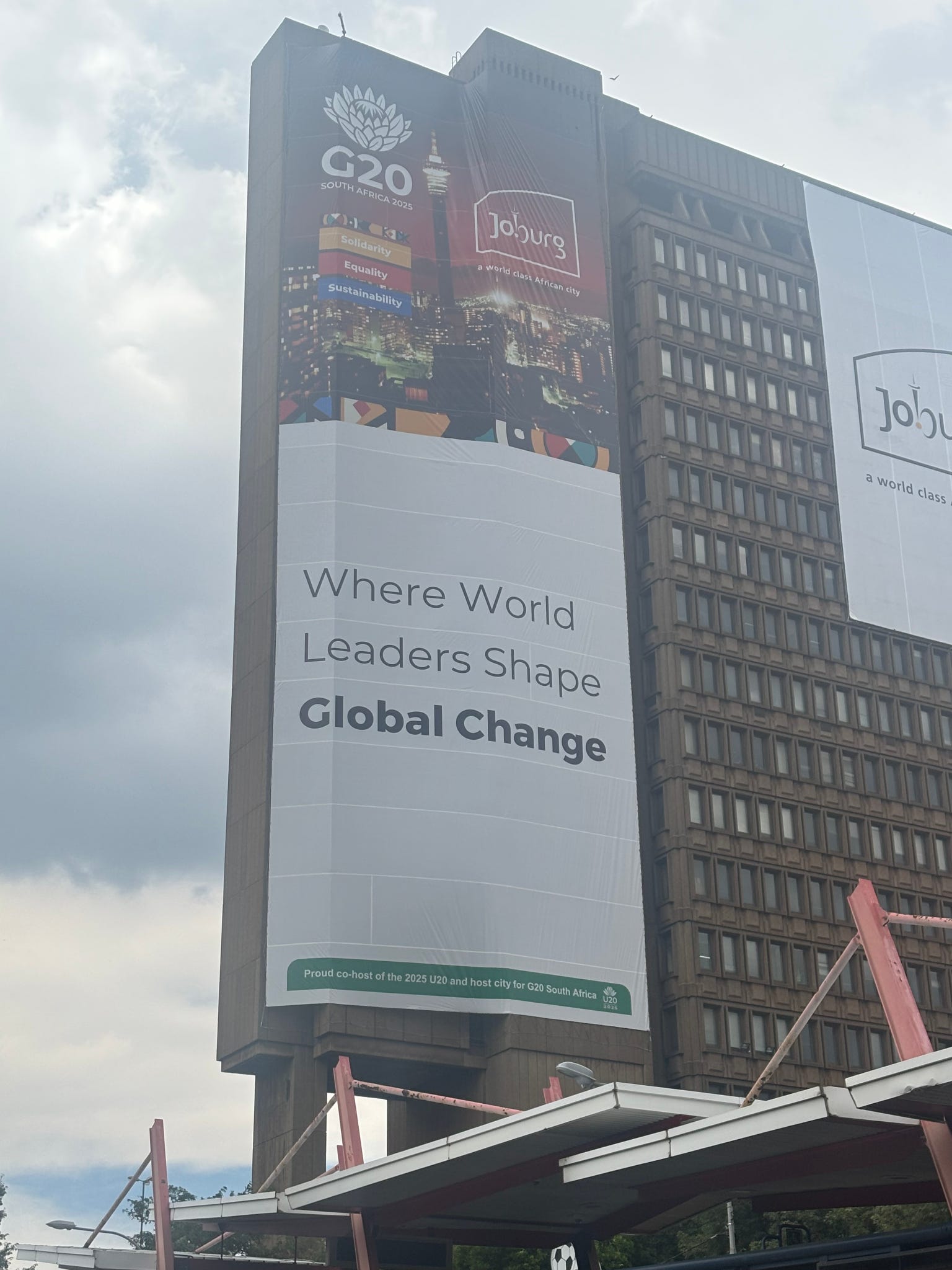
President Cyril Ramaphosa trumped Trump. Viva! But still we must ask, when the circus leaves town, will anything change?
To help G-20 delegates with the act of unseeing, eGoli, the golden medal winner of inequality, was given a multi-billion rand makeover.
But unseen streets, like this one in Kliptown, Soweto, photographed by Felix Dlangamandla, went untouched.
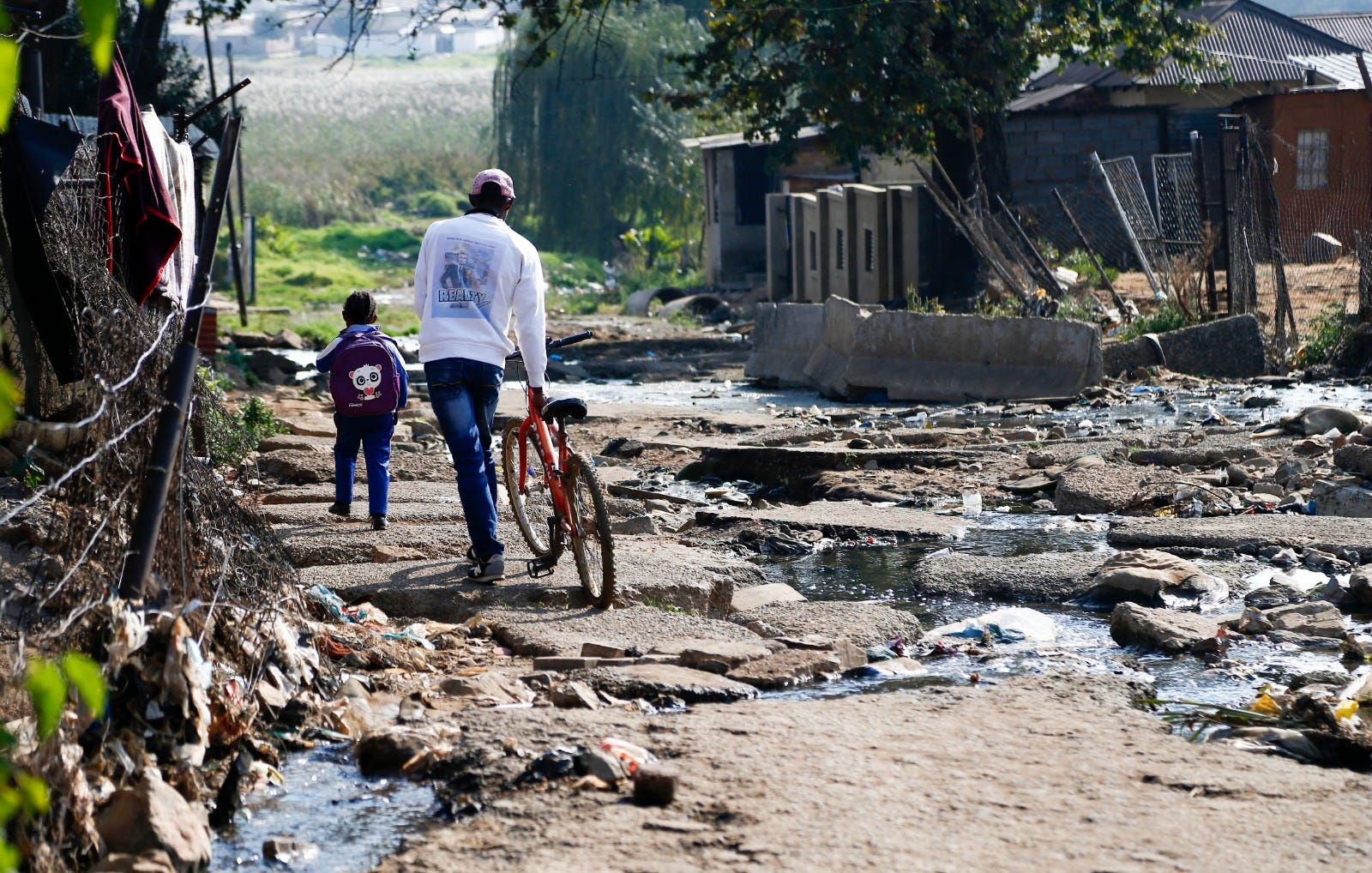
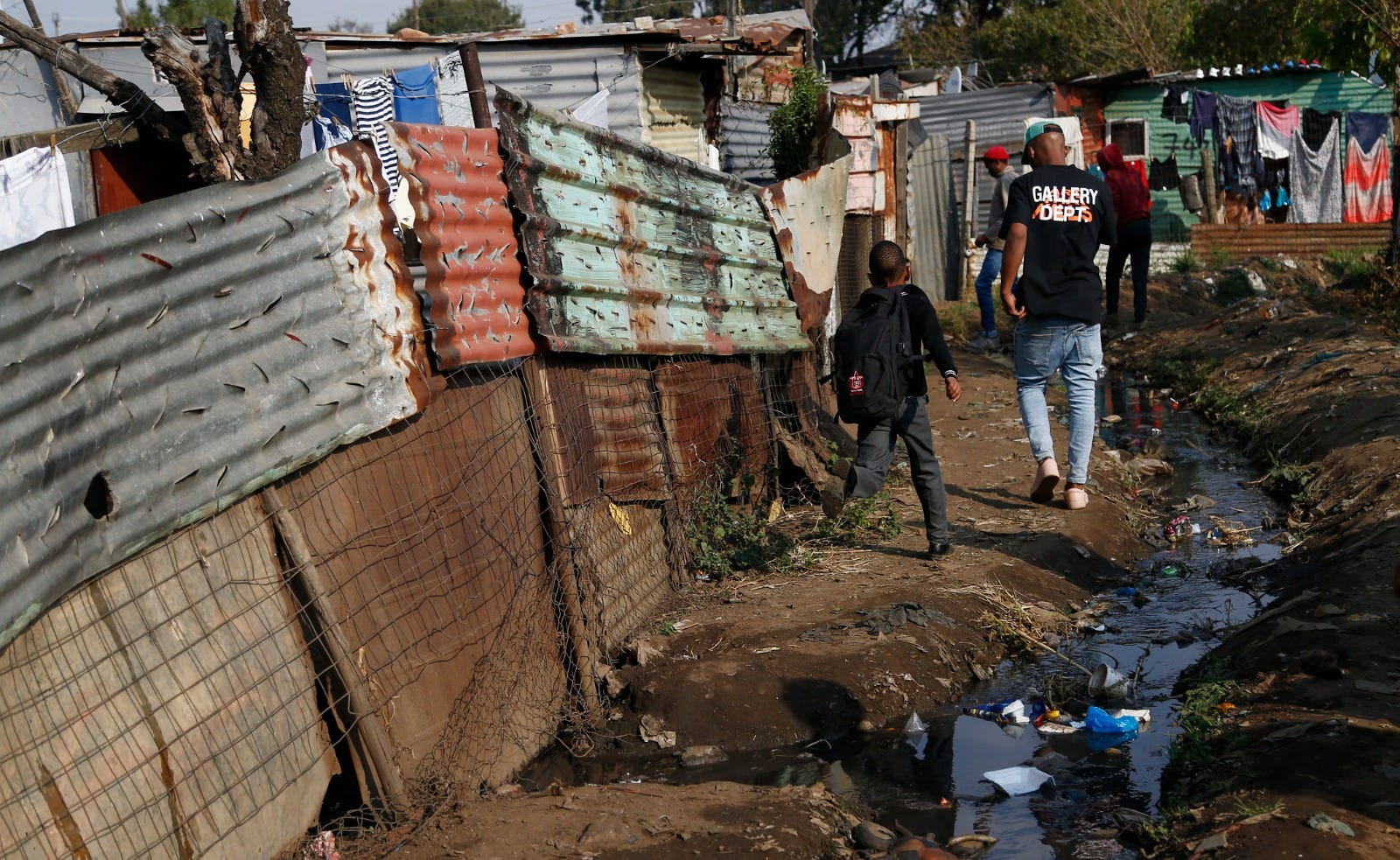
Unsee: reports about massive corruption and municipal maladministration.
Unsee: The homeless people who have been moved off the streets.
Unsee: Young people living with despair and substance addiction - the ‘Nyaope boys and girls’ - who were shunted off to ‘rehabilitation camps’.
We love our city to sparkle.
But none of its underlying inequalities have been sorted. Until visionary leadership emerges, like Zohran Mamdani, now the Mayor-elect of New York City, the hard lives of the majority of people in eGoli will remain unseen and untended.
The local government elections of 2026 offer an opportunity to change this: but can we rise to embrace a new politics to make it happen?
Listen: Redi Tlhabi and Mark Heywood: Confronting power, inequality, and the price of injustice
Thumbs up: the Union Against Hunger
“Give us this day our daily bread.”
These are the words billions of Christians chant in the Lord’s Prayer. But either the Lord’s not listening, or the extremely wealthy amongst his followers are denying their fellow men the very thing they piously pray for.
Because access to sufficient nutritious food has become the most enduring indicator of inequality. According to the G20 Leaders Declaration “up to 720 million people continued to experience hunger in 2024 and 2.6 billion people were unable to afford healthy diets.”
In South Africa 29% of children are stunted by the age of five because of hunger and malnutrition.
And it’s getting worse.
Check out the Global Hunger Index and compare it with the Extreme Wealth Line
Brazilian President Lula made a Global Campaign against Poverty and Hunger the signature Brazil left on the G20 docket they passed on to South Africa.
Recognising this, in South Africa activists have been combining forces to build a new coalition, known as the Union Against Hunger.
In ten months, more than 50 organisations and networks have joined, including the trade union federation SAFTU, the shackdwellers social movement, Abahali baseMjondolo and the campaign for universal early childhood development (Real Reform for ECD).
A petition – sign it here – and protests have been launched to demand that SA’s biggest food retailer, Shoprite, reduces prices on essential food.
Community Hunger Hearings are being held across the country.
On World Food Day activists mobilised in Cape Town and Johannesburg marching to hand over a memorandum calling for President Ramaphosa to take action.
For the first time, Ramaphosa spoke explicitly about the hunger crisis, in particular making a call on big food retailers – Shoprite, Pick N Pay, Woolworths - to drop their prices.
They aren’t listening – yet!
Profits still come before people. Shareholders before consumers.
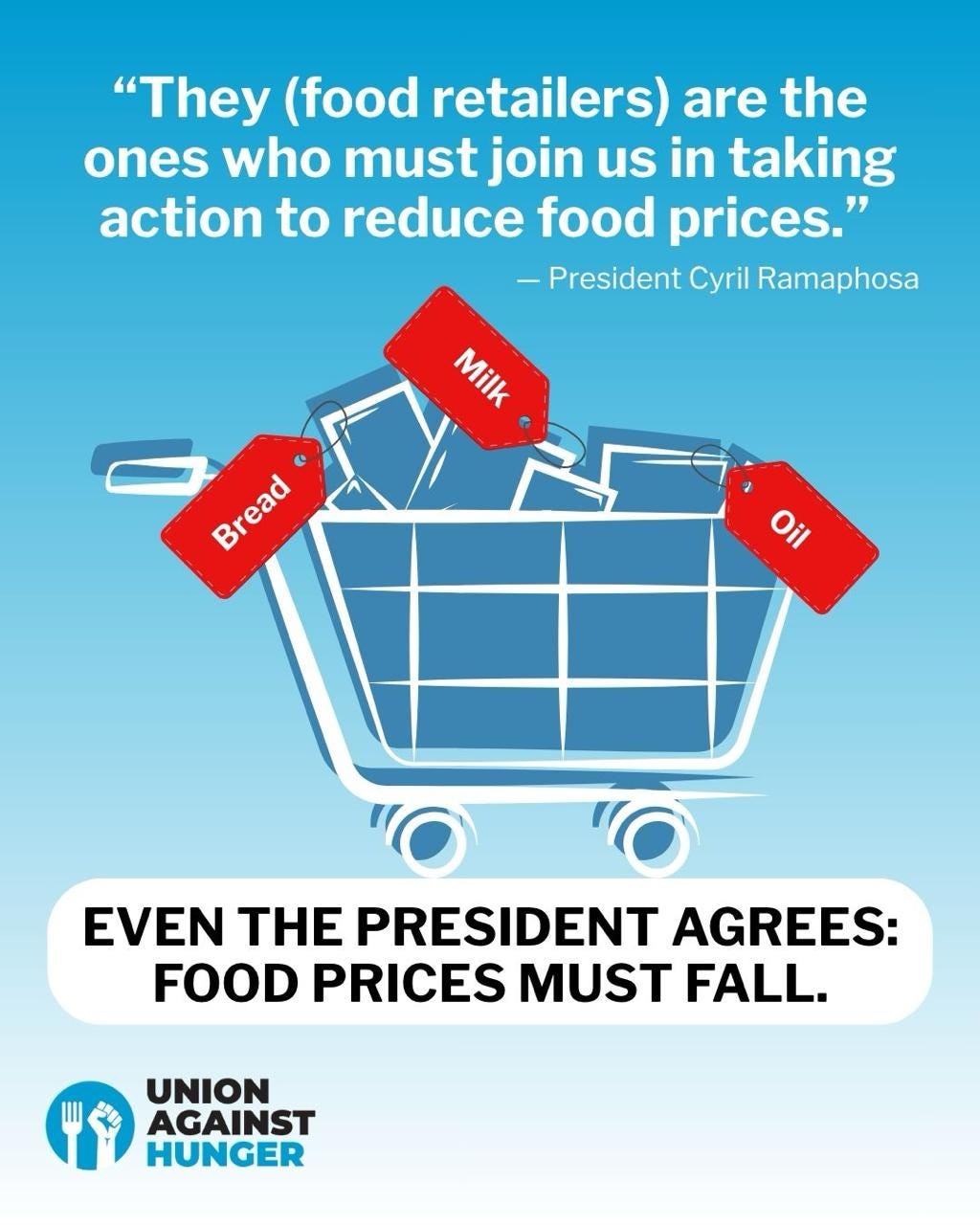
Thumbs down: Shoprite? ShopWrong
Food sovereignty demands more than just lower food prices. Food systems require fundamental transformation.
But at this moment, high food prices contribute enormously to hunger, malnutrition and the escalating inequality called out in the Stiglitz report.
In South Africa, in the midst of a hunger epidemic, four big food retail companies, tot-up profits of over TWENTY BILLION RAND a year. Much of it is made off the back of excessive pricing on the basic food stuffs bought from the social grants of the poor and unemployed.
This way social grants become a wealth transfer to the rich.
CEOs, like Pieter Engelbrecht of Shoprite, reportedly earn over R80 million a year. Roy Baggatini of Woolworths gets a cool R100 million.
Read: Shoprite CEO is SA’s best-paid retail boss as package hits R83m ;
Listen: The price of leadership: Woolworths’ remuneration debate
In contrast, according to Just Share the average CEO in the retail sector earns 597 times the salary of the lowest paid worker.
Inequality is not abstract. If there’s one place to start getting real about inequality, it’s in access to our daily bread.
Recommended reading: Hunger is a crime. Who are the criminals?
Recommended listening: Evan Onos talking about his new book the wonderfully titled: The Haves and the Have Yachts, Dispatches on the Ultra Rich
Activists bookshelf: Battles for the soul of humanity
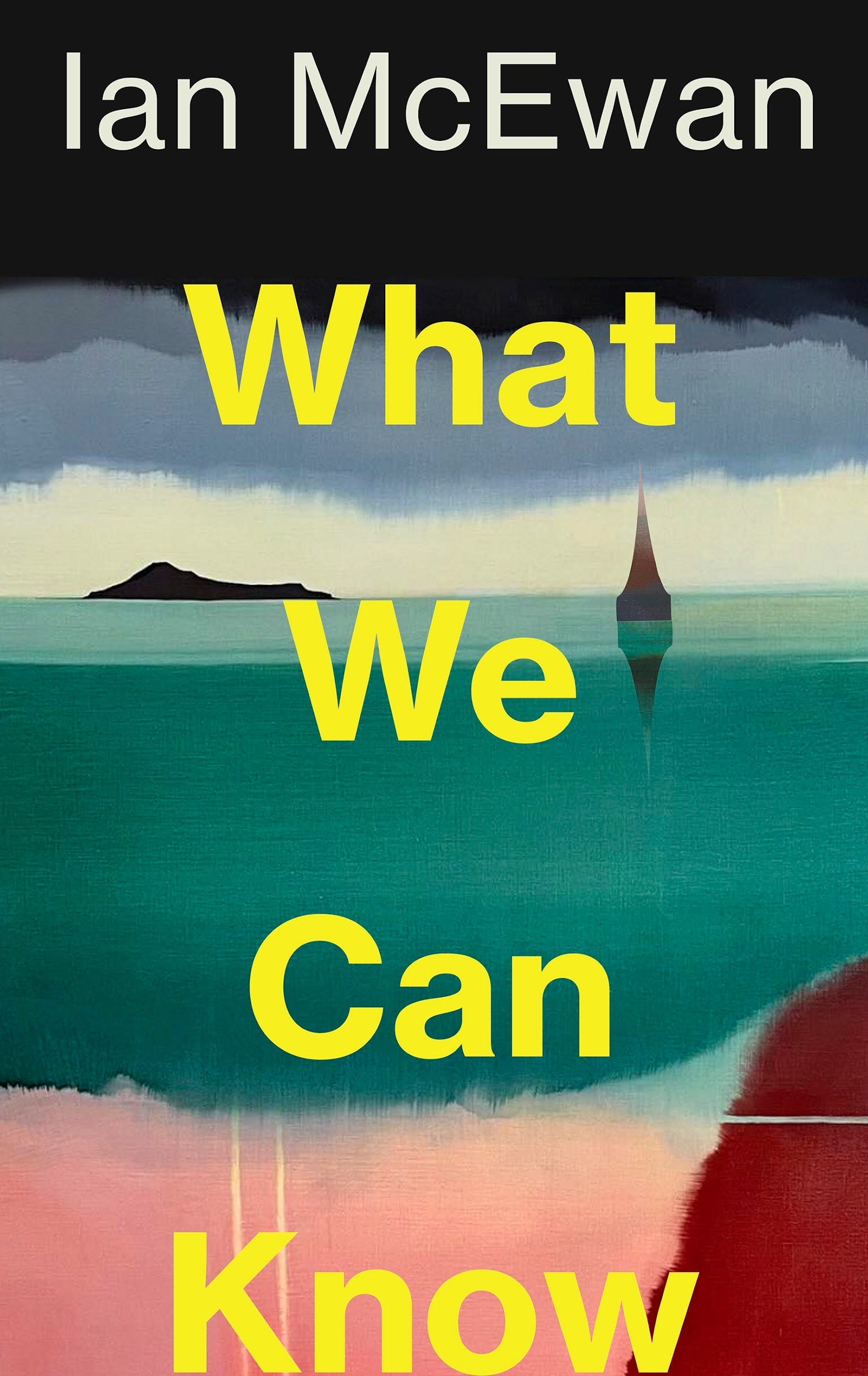
English writer Ian McEwan’s latest novel is titled What We Can Know. It’s a dystopian portrait of the world a century from now, after climate and nuclear catastrophes.
It’s 2119 and two university professors, researching the period 1990 to 2030 (now!) are in search of a lost poem.
They call the time we are living in ‘the Great Derangement’.
In a passage that captures the truth of our self-destructive and oblivious behaviors as only fiction can, McEwan celebrates the ingenuity, imagination, and vivacity of now.
But he also points to its sheer idiocy:
“... as decades sped by and the Derangement gathered pace, the weapons proliferated and they did little, even as they knew what was coming and what was needed. Such liberty and abandon, such fearful defiance. They were brilliant in their avarice, quarrelsome beyond imagining, ready to die for good and bad ideas alike. As science extended its domain, religious and conspiracy theories swelled. They were big and brave, superb scholars and scientists, actors and athletes, and they were idiots who were throwing it all away, even as their high culture lamented or roared in pain. We thrill in horror at their feistiness. They were loud, hungry, reckless and free, except for the hundreds of millions they left behind.”
There you go; Inequality again.
Literature has a poetry that in Arundathi Roy’s words “cannot be flattened into news”.
As we watch the swarming of corporate lobbyists over Belém, as another climate COP-out unfolds, full of impotent fury and discarded science, What We Can Know will bump you back to reality.
It compels us to ask what actions will change this catastrophic trajectory - and what will not.
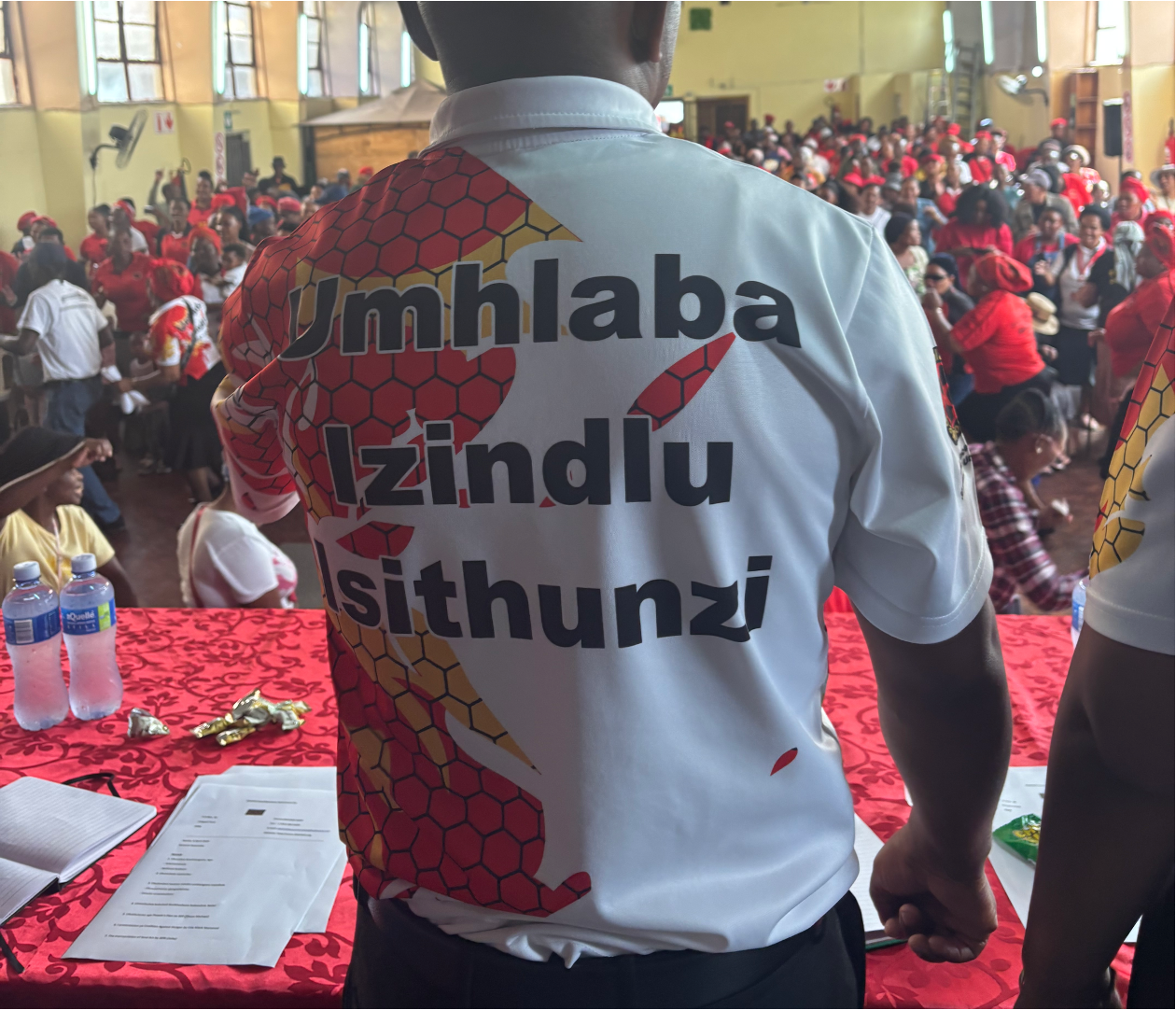
Activists Unusual: Umhlaba, Izindlu, Isithunzi (Land, Housing, Dignity)
In October 2025, the shackdwellers movement Abahlali baseMjondolo celebrated its 20th birthday. Abahali is ‘activism unusual’. It has survived as a social movement, despite the assasination of 24 of its leaders. But it has also survived co-option, politically or materially.
It has remained true to principles of solidarity, care and grass-roots mobilizing.
Recently, when an NGO, the Socio-Economic Rights Institute (SERI), was targeted with a march by Operation Dudula, Abahlali mobilised a bigger counter demonstration.
When informal traders were targeted by the ANC in Jo’burg Abahlali spoke up for them.
Abahlali is an applicants in the precedent setting judgement that has just pronounced mobilisations by xenophobes that prevent migrants from accessing schools and clinics to be unconstitutional.
Return the solidarity! Abahlali has launched a solidarity appeal to provide food to 70 elderly families who are members of the movement. Make a donation!
Dying Time
I keep a note book for poems and observations. A few months ago I scrawled the words ‘Dying Time.’
I’m not sure what I was thinking, but sadly those two words became an apt description of recent personal experience. A number of friends and comrades have died, some in ripe old age.
Some, not so ripe.
Liverpool poet Brian Patten died at 79. Patten’s poetry had been one of my first entry points into modern poetry. His poem, So Many Different Lengths of Time, was what I read at my father’s funeral.
David Hemson, life-long socialist, trade unionist, thinker, good man, died a few weeks later. I worked with Dave between 1985 and 1990 when he was in exile in London.
Then my friend and relative Sharmaine died of cancer on 2 November 2025. Sharmaine was 64, the age Paul McCartney celebrated in When I’m Sixty-Four, a song he wrote when he was 14, jocularly imagining love and life in older age.
Many people are not so lucky.
There will be no more “summers” after 64 for Sharmaine or for tens of millions of other people who die of preventable disease, treatable disease, war or just exhaustion with hard life.
Inequality intrudes even into this most fundamental aspect of being.
Sharmaine died in peace and surrounded by love. Lou Reed’s Perfect Day played just before the Last Rites were administered.
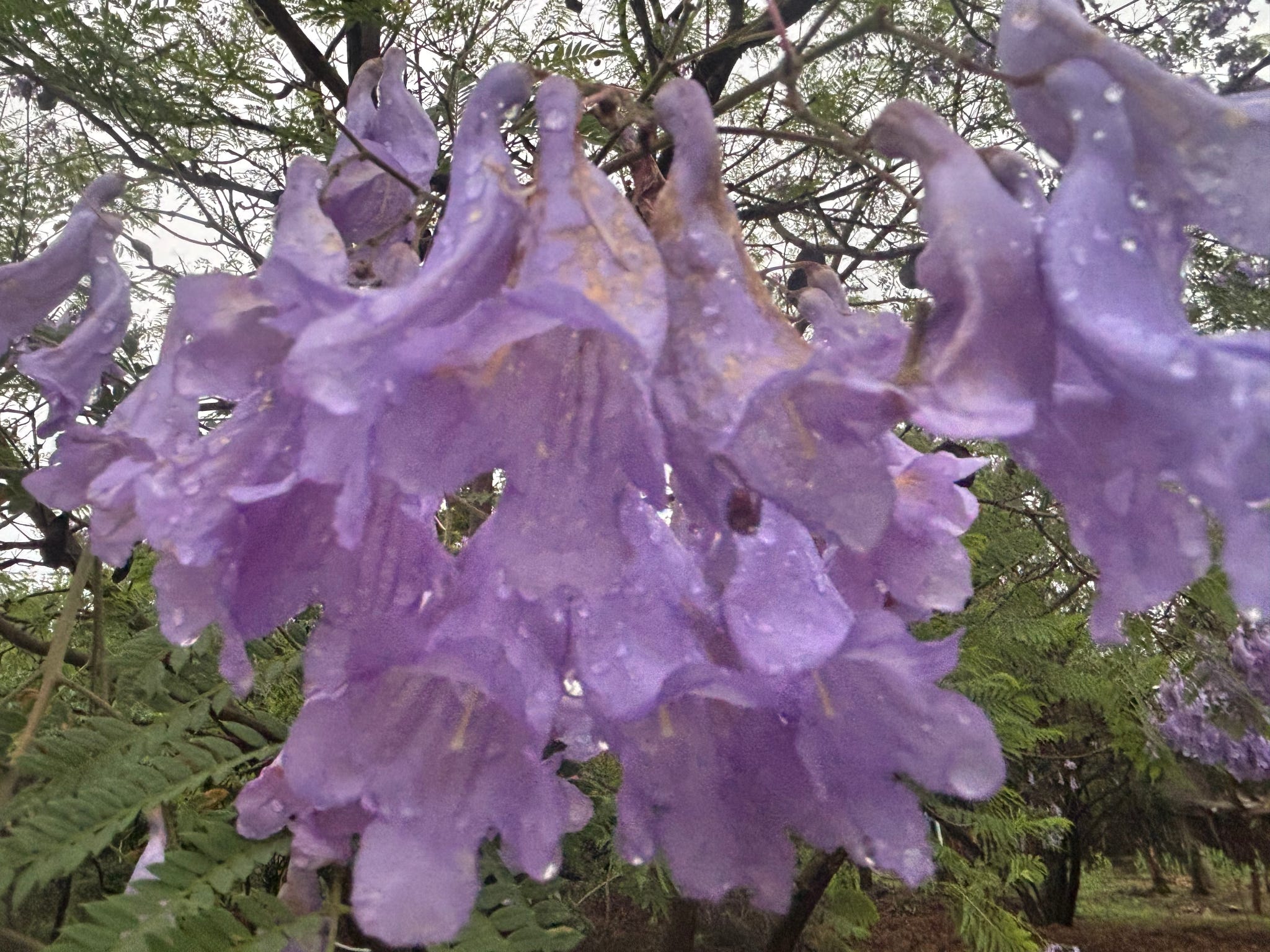
It was Jacaranda time in Joburg, the skies opened up and the rain poured down.
At her eclectic funeral a peacock called out repeatedly and Mandla Mlangeni, a jazz trumpeter, played Amazing Grace.
Later in the afternoon I came across a posse of Jacaranda blossoms huddling after the rain like bedraggled children sheltering at a bus stop.
The flowers whispered a reminder of what Russian revolutionary Leon Trotsky wrote on his deathbed: “Life is beautiful. Let future generations rid it of all evil, oppression and violence and live it to the full.”
Or, as Jimmy Cliff (Rest In Music), put it in his anthem, Wonderful World, Beautiful People:
Take a look at the world
And the state that it’s in today
I am sure you’ll agree
We all could make it a better way
With our love put together
Everybody learn to love each other
Instead of fussing and fighting
Cheating, backbiting
Scandalizing and hating
There is a better way. That’s why we are still trying to bend the arc towards justice.
Love and peace,
Mark
Heywood
The Justice and Activism Hub is a change tank for a time of change. We are committed to strengthening social justice struggles through connection, collaboration, coordination, convening and catalysing.