
Today they say that we are free
Only to be chained in poverty …
Slave driver
The tables will turn
Catch a fire
You’re going to get burned.
Bob Marley, Slave Driver, Album: Catch a Fire, 1973
Souls Rebels,
Today is International Workers Day, celebrated on May 1st every year since 1889. In South Africa it comes shortly after Freedom Day, April 27th. 136 years later it’s reason to reflect on the connections between freedom, the falling numbers of people across the world who still have formal employment and the power of the trade union movement. Neo-liberalism has stigmatised, delegitimized, marginalised and even criminalised trade union organization. By doing so it has purposefully robbed progressives of one of the most powerful, democratic and effective agencies of change.
But whilst the unions may be weaker than ever before, there are still more than 200 million trade union members worldwide. And the raison d'etre for trade unionism is greater than ever. As British poet Linton Kwesi Johnson put it way back in 1984: Wat About Di Working Class? (found on the album Making History):
From di east to di west in di land I love di best
Di ruling classes dem is in a mess, oh yes!
Crisis is di order of di day
Di workers dem demanding more pay everyday …
There’s a lot of people cryin out fi change now a day
So on May Day 2025 JAH News gives recognition and praise to activists at companies like Amazon who are trying to rebuild trade unions as vehicles for social justice and freedom! The fight is on.
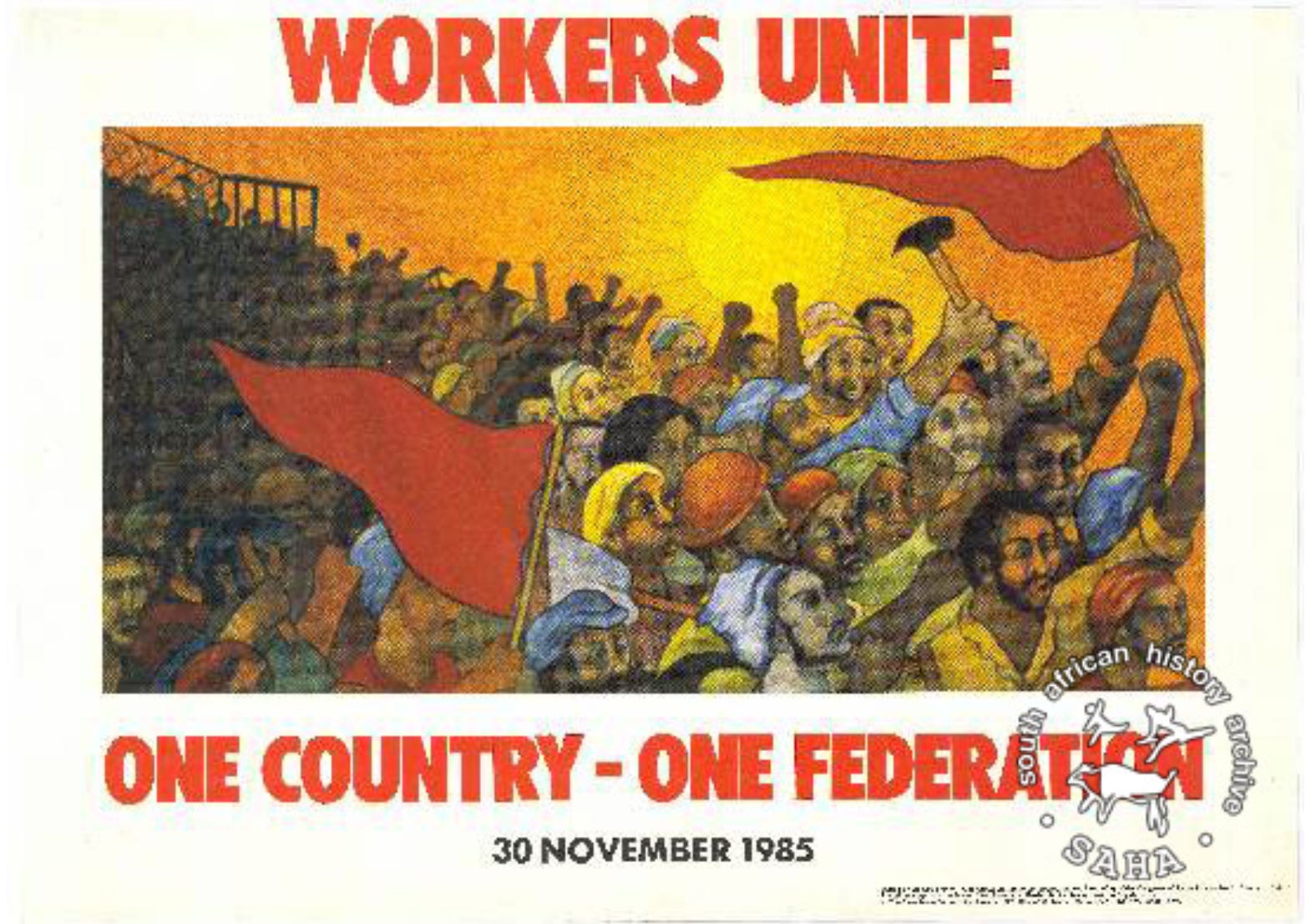
Thumbs up: Sifuna Konke!
2025 marks 40 years since the founding of the Congress of South African Trade Unions (COSATU). Truth be told, as you can see from the spirit of this collection of posters from the 1980s it was worker strikes and stay-aways organised by COSATU that made apartheid South Africa ungovernable and hastened political freedom.
In South Africa the heroic tradition of trade unionism stretches back to 1922 and larger than life activists like “Pickhandle” Mary Fitzgerald. Its spirit is captured in this moving Radio 702 interview with SAFTU General Secretary Zwelinzima Vavi about his life. Vavi has been a trade unionist for 41 years. He says he started marching in 1977, protesting the murder of Steve Biko and “has been marching ever since up to this moment”.
This rich vein of resistance makes the divisions, corruption and decline of the trade union movement even more painful. But activists would be playing into the hands of the oligarchs to write-off trade union power. Despite mass unemployment, millions are still being exploited in precarious low paid jobs. Last night, when I wished a woman worker at Woolworths happy workers day, she sighed and responded “what workers day? The workers will be working.” Decent work and an income should be a human right. That is why there is a need for convergence between trade unions, civil society and social movements.
Taking on the Tech Bros
In the mid-1980s when Margaret Thatcher launched her assault on trade union power, one of her first targets was the British print worker unions. In 1986 I was present at the famous Battle of Wapping where unions tried to stop Rupert Murdoch from moving his newspapers to a new plant – “fortress Wapping” – away from Fleet Street.
Sadly, they were defeated.
30 years later journalism is being decimated all over the world.
On one front, though, it does appear that the campaign against abusive corporate power, in this instance the power of Big Tech, is gaining ground. Whilst Donald Trump and the techbros might be entwined in a mutually parasitic relationship, mocked mercilessly by US comedian Jon Stewart, Big Tech is being challenged in courts in the USA, Europe, Ghana … indeed over the world.
In South Africa a Media and Digital Platform Market Inquiry by the Competition Commission (CC) (find the TOR here) led to a provisional report, published in February 2025, that made far reaching findings against Meta, Google, X and YouTube. Amongst other things it recommended that Google pay 500 million Rands a year into a South African media fund. The ghouls at Google will fight these recommendations tooth and nail.
That’s no surprise.
Like Trump, the Tech Bros want unfettered power. South Africa’s Campaign for Digital Ethics (CODE) points out in a submission to the CC that predatory behavior by the tech companies is built into their DNA:
“... surveillance capitalism underpins the competitive distortions observed in digital markets, including those harming the South African news media. Identifying this mechanism clarifies that unethical data extraction is not a series of discrete practices but a singular, core driver behind entrenched monopolies. This empowers policymakers to implement structural remedies rather than limiting themselves to isolated, but necessary fixes, only.”
MPs wake up! Reforms that curtail big tech’s power are urgent and will be welcome. But not enough.
“Be Afraid”:
Watch: This Is What a Digital Coup Looks Like by Carole Cadwalladr the British journalist who exposed Facebook in the Cambridge Analytica scandal. If anyone knows the threat posed to democracy by Big Tech she does.
Activists bookshelf
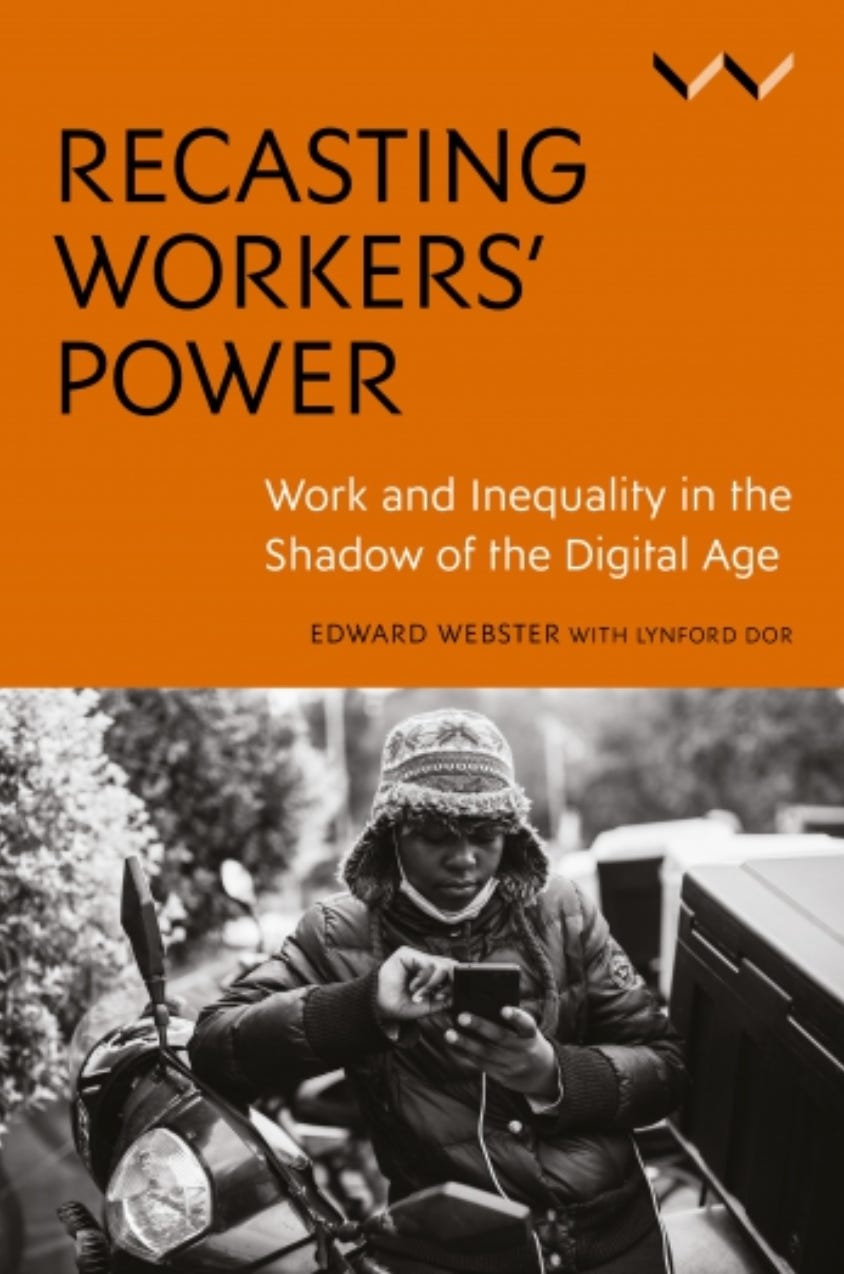
It is just over a year since the death of the great South African sociologist and labour movement researcher Eddie Webster. Eddie’s last book Recasting Workers’ Power was published months before his death. Recognising that “the labour movement worldwide is no longer the social force it was in the twentieth century,” it calls for a rethinking of the labour question in the digital age.
Webster’s meticulous analysis and searching questions still concludes that “if by the labour movement we mean not just the traditional trade union movement … , but this wider movement where self-defined workers organise, there is no doubt that the labour movement retains the power to drive processes of social change.”
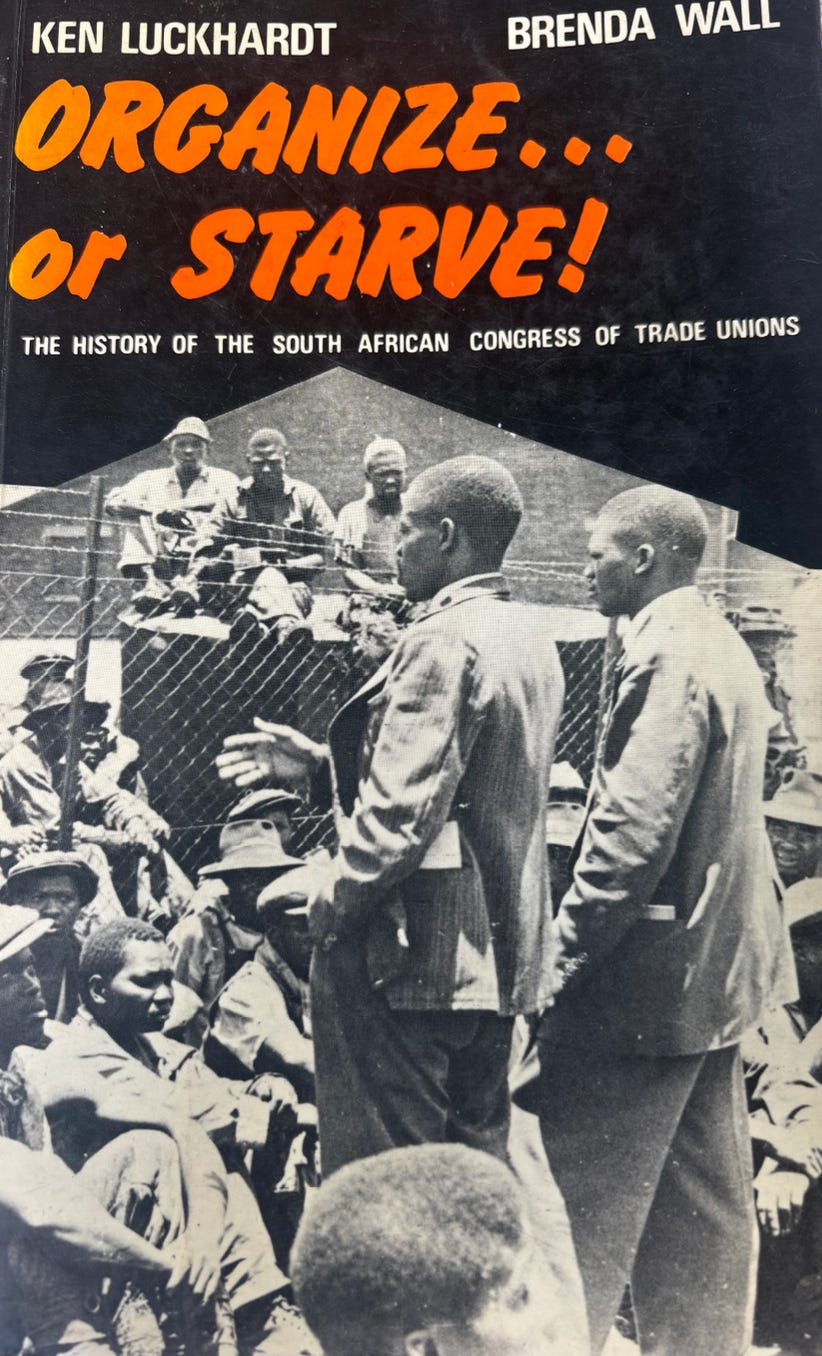
Hear, hear! As a student activist I was fortunate to participate in the great British mineworkers strike (1984-85). Later, I spent time with trade union veteran Nimrod Sejake, one of the leaders of the South African Council of Trade Unions (SACTU) in the 1950s (seen on the cover page of the history of SACTU opposite).
Younger activists today have grown up in a period where the labour movement has been in disarray. However, to overlook the potential power of organised workers ignores a vital power for transformation. As Billy Bragg sings “There is power in a Union!”
Every civil society activist should be a trade union recruiter!
Tool up on trade unionism! Here are some great resources:
Listen: DJ, journalist, musicologist and podcaster Charles Leonard has turned his hand to producing Buwa Basebetsi, a series of podcasts on workers rights for the Casual Workers Advice Office (CWAO).
Read: The International Labour Research and Information Group (ILRIG) Workers World News.
Watch: Pride, a tear-jerker of a film about how a gay and lesbian support group threw its support behind the British miners strike.
Activism unusual: Bob Nameng
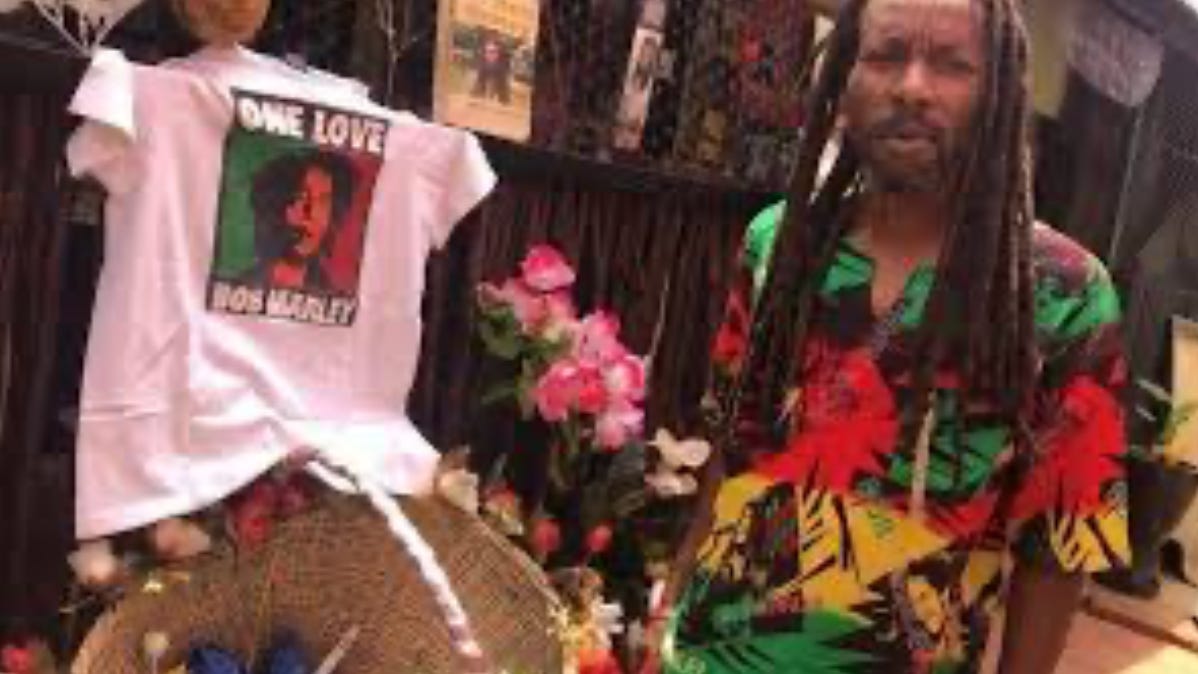
The father of Kliptown, Soweto, Bob Nameng (1 July 1970 - 19 April 2025) is no more. I got to know Bob because of his lifetime of community activism, particularly inspiring and uplifting children, and his love of Bob Marley.
The first time I entered his house, on Union street, it was like entering a magical grotto, adorned with murals, Bob Marley regalia, rastafarian colours and the bric-a-brac of everyday life. Bob’s garage-cum living room was an open community space, where elders and children always gathered.
Bob’s memorial last week took place at the Kliptown Youth Project, an offshootof Soweto Kliptown Youth (SKY), which Bob had created many years ago. As I listened to speaker after speaker, watched the rapturous dance and song of young people, I felt his spirit.
It was like a family reunion. Bob had grown his community, through a mixture of conversation, sport, inspiration, love and helping people mired in poverty to find the riches in themselves. Bob had never left his community. He realised that power lies at home. He lived in the community and the community lived in him. As one speaker said, “Bob didn’t die, he multiplied.” Jah Bless.
Bob Nameng lives:
Read my tribute here: Another world is possible — Bob Nameng, the Soul Rebel of Kliptown
Watch What's Going On, Bob’s song about Kliptown;
Listen to him explain his work with children in the Kliptown community here.
Solidarity forever
Abahlali baseMjondolo, the shack dwellers movement, always opens its meetings and marches by singing The Internationale. It felt revitalizing to sing it again, when I joined their Unfreedom Day march in the pouring rain in Durban.
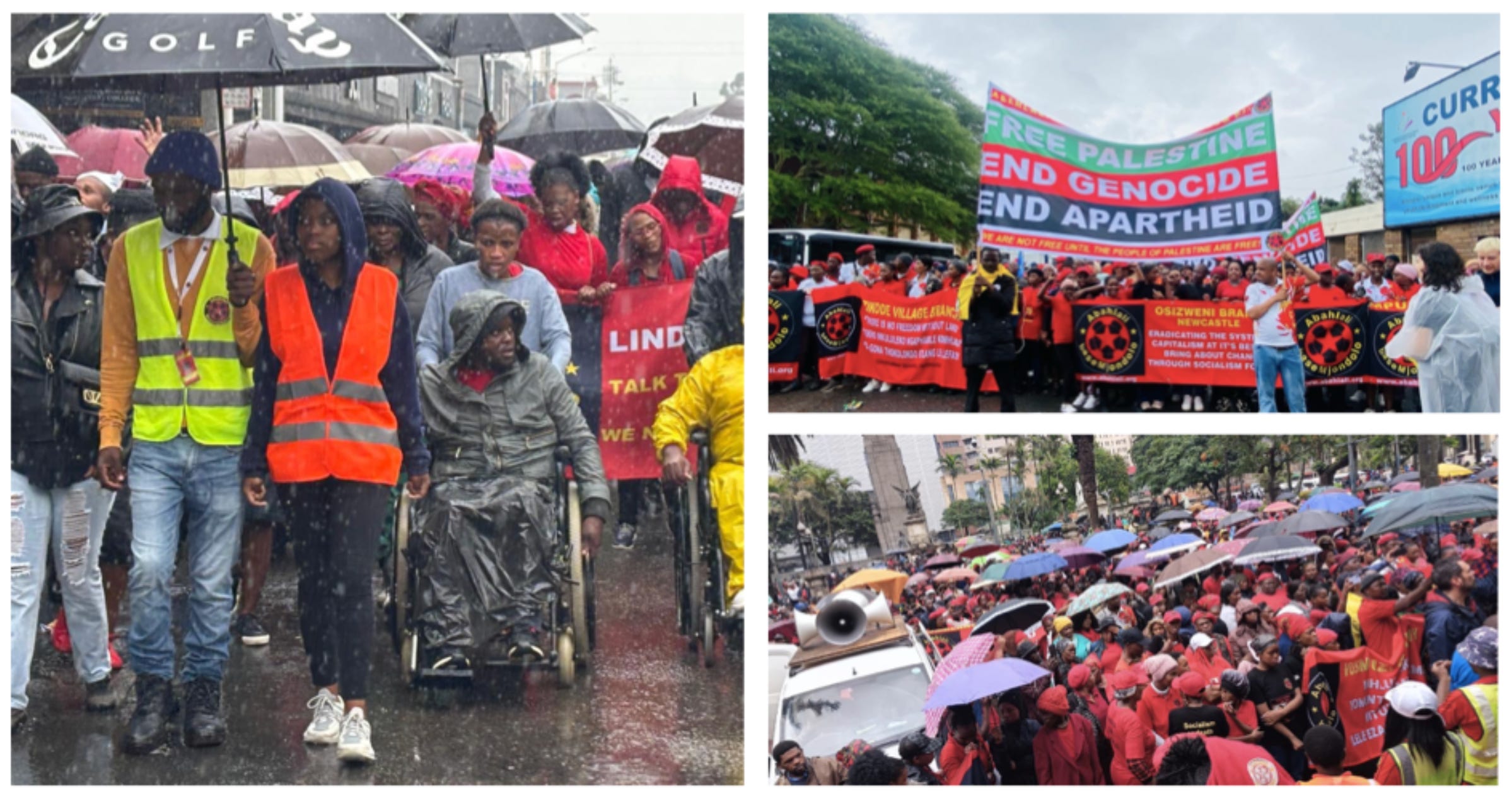
Scenes from the Abahlali baseMjondolo march, 25th April 2025
Reds, the great biopic of the 1917 Russian Revolution, is a film that has inspired me throughout my life. So, I sign off JAH News with a link to a beautiful rendition of The Internationale in a scene from Reds that depicts the day of overthrow of the old order. No apologies for the way it infuses the romance between radical journalists Jack Reed and Louise Bryant into the story of the revolution! Revolution should be love.
See you on the picket line!
Mark
Heywood
If you enjoyed this newsletter please forward it to other soul rebels. They can subscribe by contacting me at markjamesheywood@gmail.com

The Justice and Activism Hub is a change tank for a time of change. We are committed to strengthening social justice struggles through connection, collaboration, coordination, convening and catalysing