
You see men sailing on their ego trips
Blast off on their spaceships
Million miles from reality
No care for you, no care for me
- So Much Trouble in the World, Bob Marley, Survival, 1979
Soul Rebels,
It was the worst of times. It was the worst of times. But oftentimes the worst of times brings out the best.
Donald Trump, aided by apartheid-denialist Elon Musk, has continued to target a part of his cruelty on South Africans. Trump justifies his actions on disinformation. But the real reason is that Project Trump fears what South Africa stands for: human rights, non-racialism, solidarity, community, international law.
Our challenge is to live up to his fears.
Trump’s zest for harm has ignited global solidarity with South Africa not seen since the campaign for access to AIDS treatment and the anti-apartheid movement. 100-plus MPs from across the world declared "We stand with South Africa" and called on their own governments “to pursue new mechanisms to support South Africa’s public health programs and to expand new avenues for international trade to bolster its economy against efforts to exclude it.” Then, the Global Coalition for Tech Justice, made up of 250 organizations in 55 counties, issued a statement condemning Elon Musk and his disinformation campaign against South Africa. And an American living in South Africa, author of the Get Gone Primer, appealed that SA offer itself as a sanctuary to people fleeing white minority rule in the USA.
The question is: can South Africans live by the values we entrenched in our Constitution?
Thumbs up: Doors of learning and culture re-open
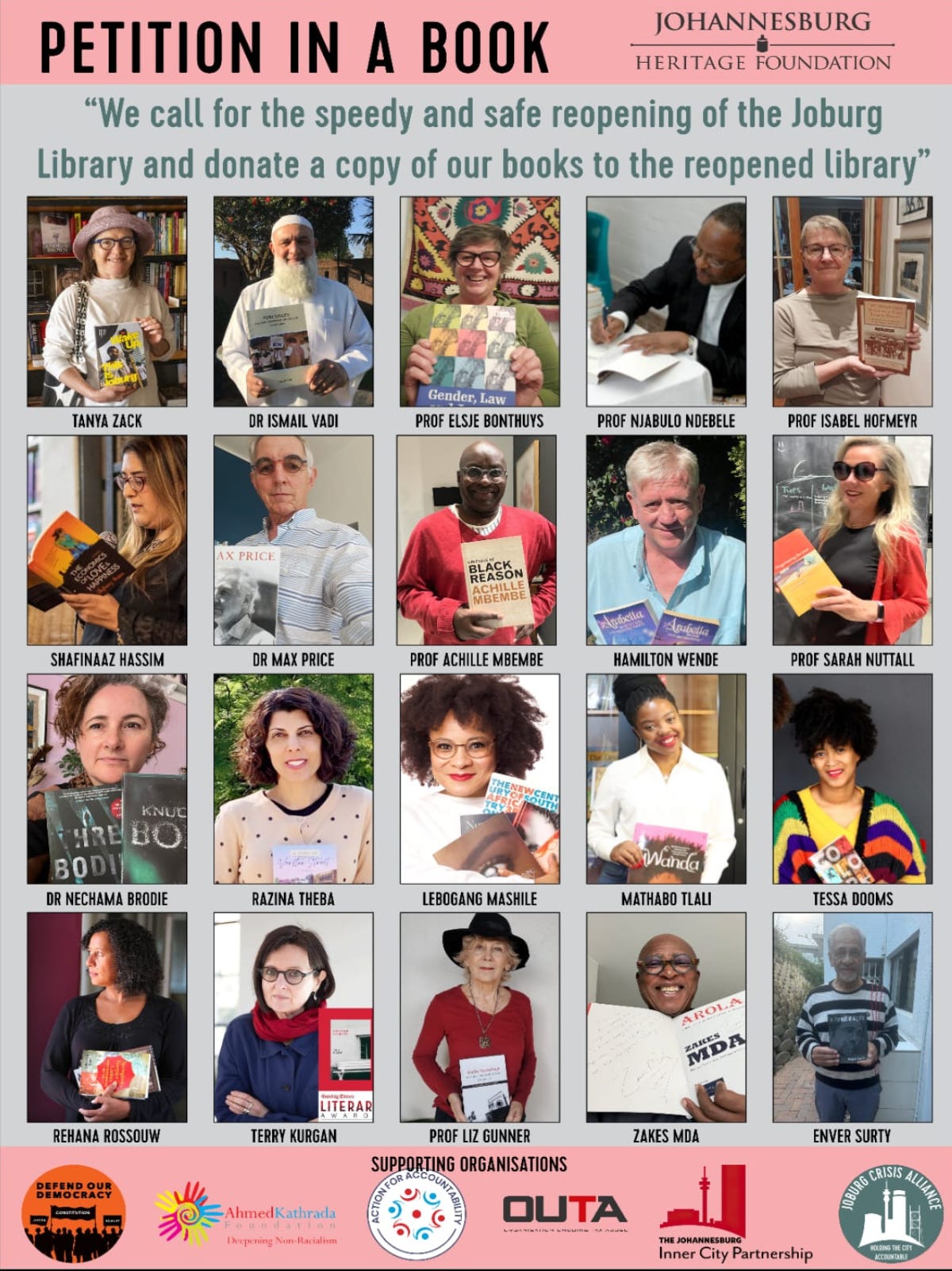
Johannesburg Library is a national treasure. It’s a precious, quiet space for learners from poor backgrounds. Read why here. Its care is entrusted to the Joburg City Council. Mayor Morero won’t admit it, but it took an activist campaign by the Johannesburg Heritage Foundation and the Johannesburg Crisis Alliance to force the Council to re-open it after five years.
Now that these doors are open again, we need to fight for the reopening of other local libraries. Jo’burg Library is part of the Johannesburg Literary District, a downtown area that activists like Griffin Shea are dreaming to revive.
With a bunch of holidays coming up, if you want to be inspired then book a spot on Griffin’s Underground Booksellers Walking Tour.
Fighting for life: How the poor die
In 1946 George Orwell wrote How the Poor Die, an essay about his experience in a Paris hospital in 1928. At around the same time Frantz Fanon was fulminating about how Algerian migrants were maltreated by racist doctors in Southern France. Health care has advanced in leaps and bounds since then. But the conditions in which poor people receive care are not much better.
Activists continue to shine a light for health rights.
On 27 March judgement was handed down on the Cancer Alliance’s High Court application to demand that the Gauteng government provide radiology treatment to hundreds of cancer patients and save lives. The right to health won.
The judge called the provincial government “insensitive and dismissive of the actual harm that has been - and is being - suffered by the cancer patients on the backlog list, to whom they owe (undisputed) constitutional obligations”, declaring that “rights had been trampled on” and that people have died as a result.
He ordered the Gauteng Health department “to take all steps necessary to provide radiation oncology services to backlog list patients … at Charlotte Maxeke Johannesburg Academic Hospital and Steve Biko Academic Hospital at a public and/or private facility” and to provide a progress report within three months.
The bad news is that the Gauteng health department, which has limitless money for lawyers to defend its errant officials – but no money for posts and doctors’ overtime – is appealing.
Talking about Gauteng Health … and the law.
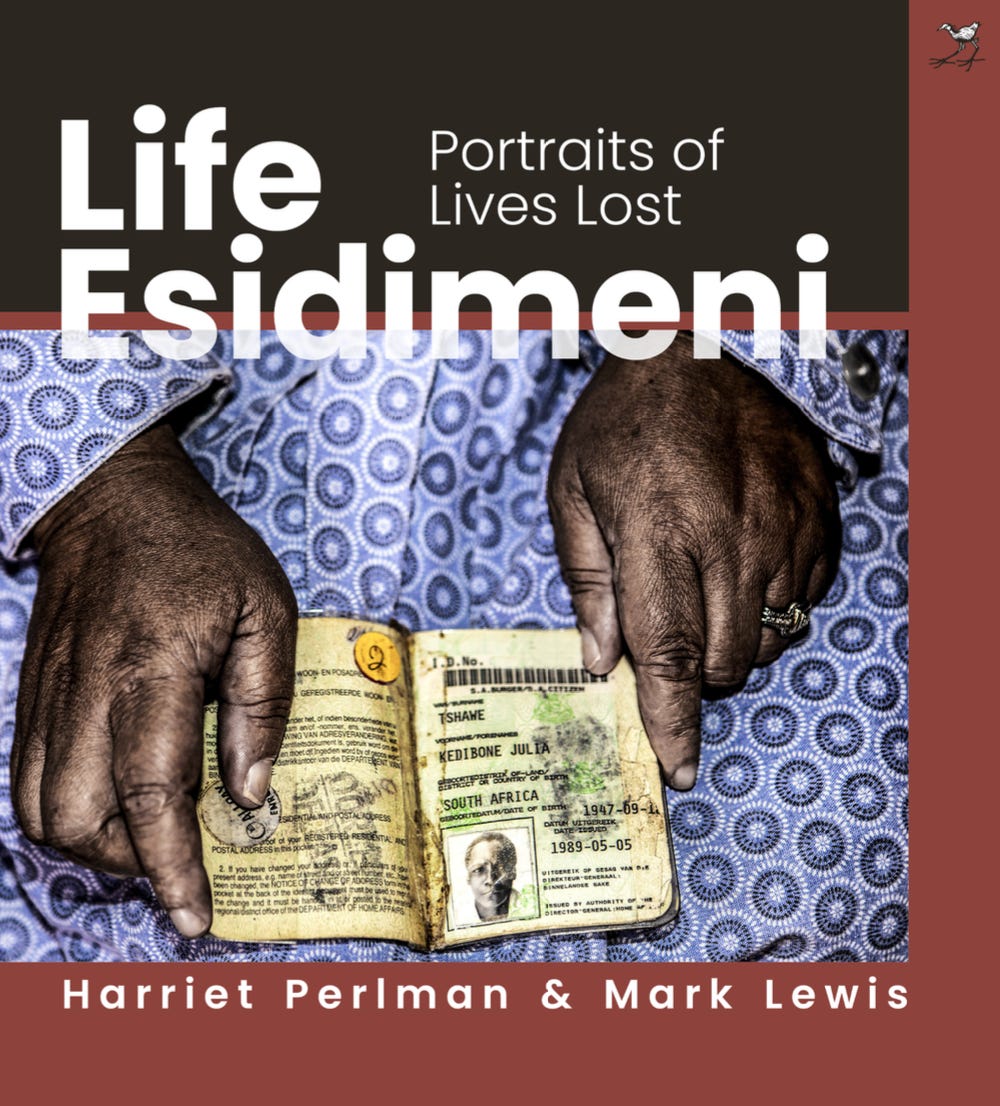
In July 2024 judgement was delivered in the arduous, painful inquest into the Life Esidimeni disaster, which cost the lives of 144 mental health care users. Former Member of the Executive Council (MEC) for Health in Gauteng, Qedani Mahlangu, and one of her henchwomen, were found to have “negligently caused the deaths” of nine Life Esidimeni patients. Their lawyers cost the taxpayer more than R75 million in legal costs.
The judgement was immediately sent to the National Prosecuting Authority (NPA) who need to take a decision on charging and prosecuting Mahlangu. After both an Arbitration (judgment here) and the Inquest the NPA has detailed and damning evidence. But eight months later it still hasn’t made a decision. Lest we forget (in case you don’t know what happened at Life Esidimeni or who died), visit the Life Esidmeni online memorial here: Life Esidimeni.
Finally, let us never forgive Israel for its ongoing genocide against Palestinians in Gaza, now emboldened by Trump’s culture of impunity to execute paramedics.
Read: Red Crescent Worker Who Survived Israeli Massacre Recounts Horror. There really are no words.
Activists’ bookshelf
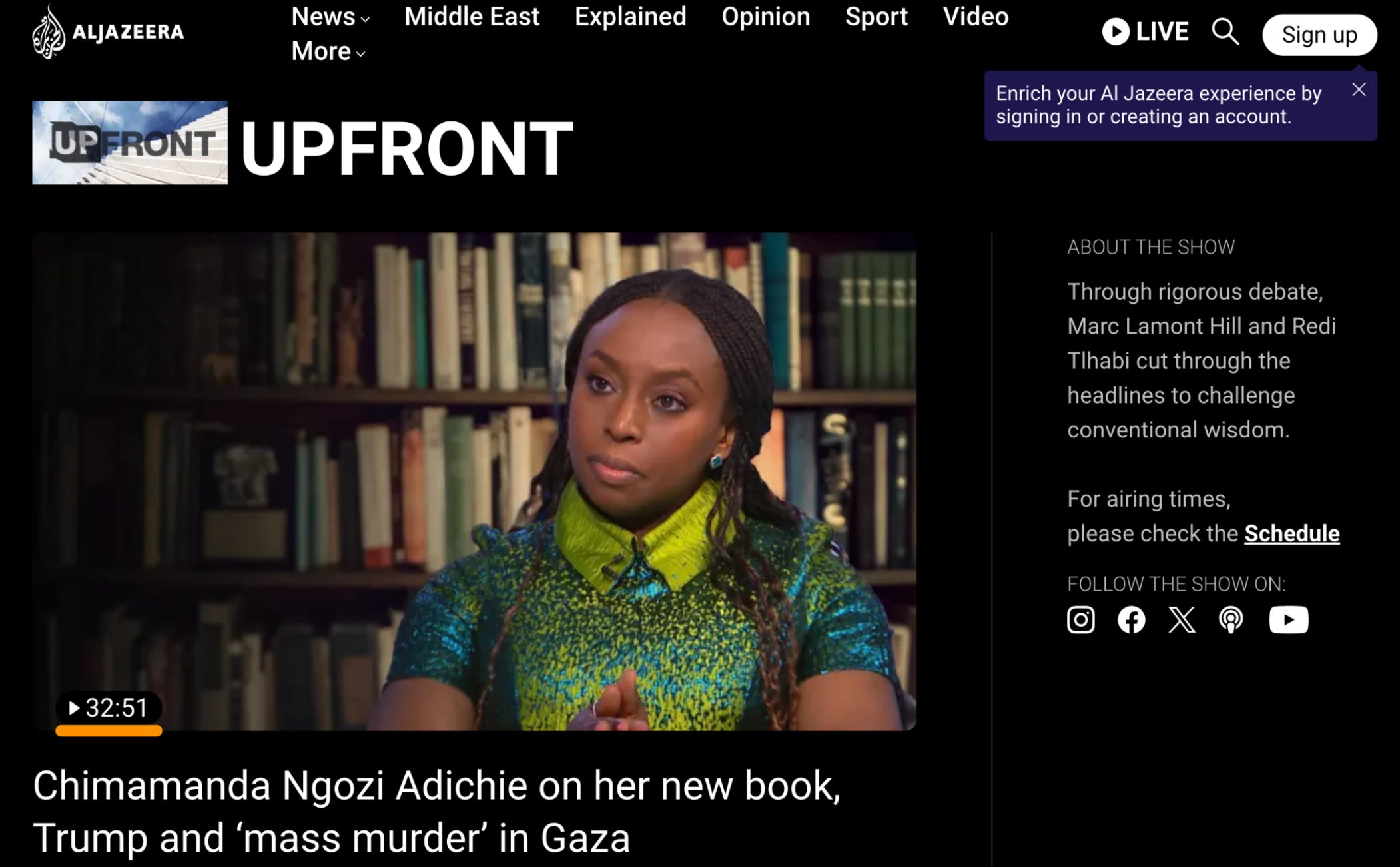
Hurrah! Chimamanda Ngozi Adichie has a new novel, Dream Count.
In her new job as an anchor for Al Jazeera’s UpFront programme my friend Redi Tlhabi interviewed Chimamanda about her novel, life in the USA, Trump, Gaza and the left. Two African women writers talking literature and politics makes for an uplifting interview.
With echoes of Achille Mbembe, Redi asks: “Watching what’s happening here in the United States I wonder whether Africa has something to teach America about
… the mental, emotional, psychological toll of having to rebuild what you are breaking?”
In her response Adichie expresses puzzlement about “the unnecessary recklessness” of “the gleeful confederacy of dunces” and the “wilful incompetence” that has been embraced by the Trump administration.
“The cruelty is the point.”
Asked by Redi about her statement that “fiction is our last frontier,” Adichie expands on the importance of reading literature and poetry at this moment and concludes “I think one of the ways to cope is to open a book.”
Reading is one of my coping strategies too. As I explain in The anguish of literature and the unexpected links between the stories we read, literature canvasses all that has gone wrong in human society, but it also captures our resilience. The act of reading a book disconnects us from digital algorithms that are subverting our emotions. It gives us the shelter and stillness to make sense of the world, to regroup and work out how to resist.
Activists unusual: Invisible organisers
My friend George Mohala, a devoted Kliptown community activist, has died. In the shadow of the famous Freedom Square George spent his whole life fighting for a forgotten community, one that still lives in squalor. There was something about George that made you love him. We were due to meet again.
Too many activists from poor backgrounds die too young.
Sukoluhle Moyo is a name you won't know. But we owe it to her to read Jo’burg activist Nigel Branken’s poignant tribute to her: The City of Johannesburg let her down — remembering Sukoluhle Moyo. In Branken’s words:
“Sukoluhle never made the news. But she made history. And if justice means anything in this country, her name deserves to be remembered – not only by those she walked with, but by all of us. Her life, lived mostly in obscurity, will never make headlines. But it should.
“Because Sukoluhle Moyo taught us how to see.
“She taught us to see injustice. To see one another. To see what really matters.”
Strangely, the tribute triggered memories of a 1744 English nursery rhyme, Who Killed Cock Robin? and then of a 1968 Bob Dylan song, Who Killed Davey Moore?
“Not I”.
Three hundred years later we are still displacing responsibility for the loss of opportunity, dignity and life of the wretched of the earth.
Who killed Sukoluhle Moyo and her children?
We all did.
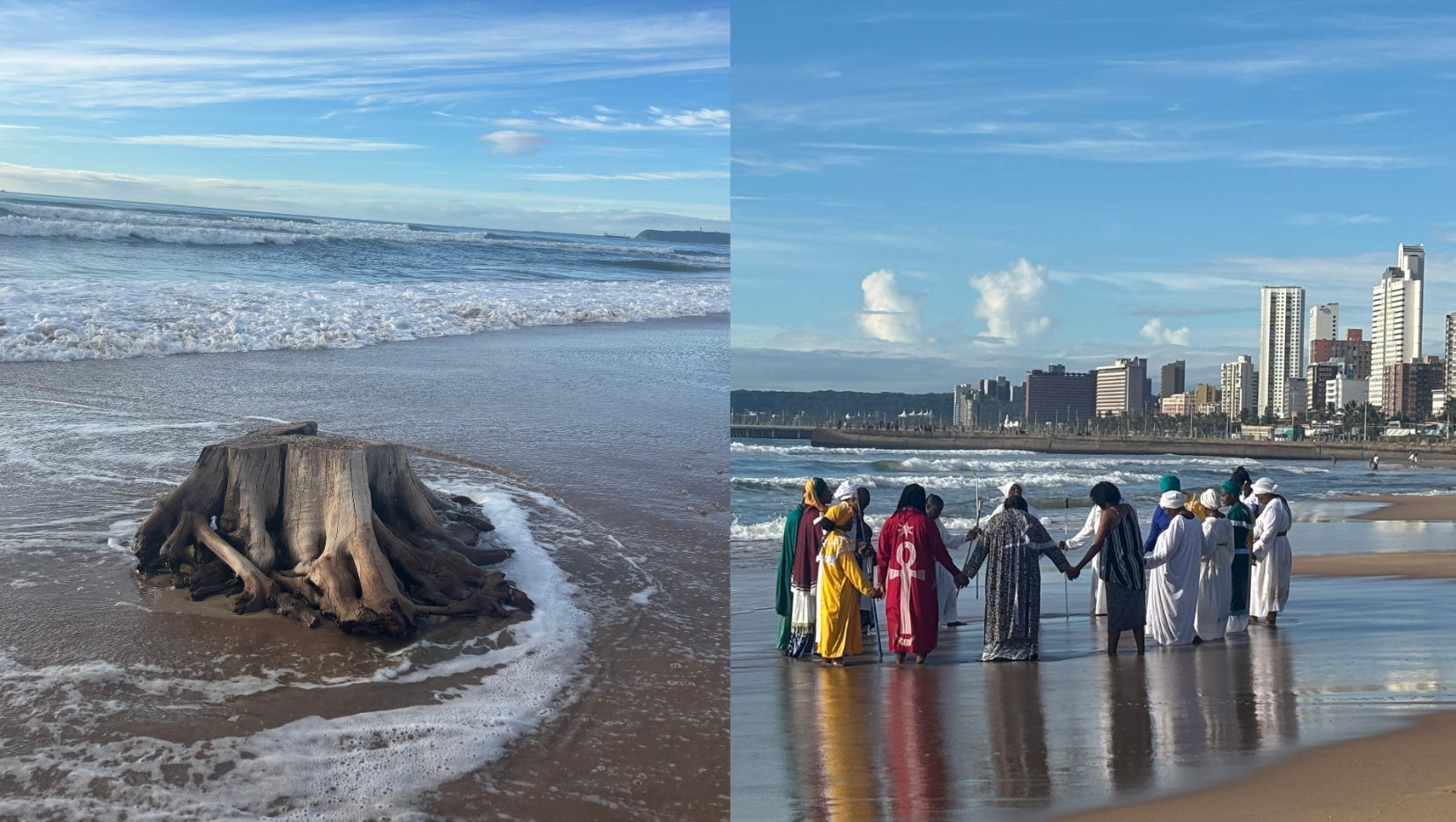
Circles of life
Miracles Nestled in the Ordinary
Last weekend I travelled to Durban to address the shack-dwellers movement Abahlali baseMjondolo’s General Assembly about the Union Against Hunger and the struggle for the right to food. Shortly after dawn, before the meeting, I went running along North Beach hoping to catch some poetry. I wasn’t disappointed.
It’s autumn in South Africa. So I’ll sign out with a song by Damian Marley, Marley’s youngest son.
Autumn Leaves, is a song of hope:
Life is full of ups and downs
The carousels of love
Good times, bad times, smiles, and frowns
Don't give up on me
Watch the video of the song, it’s a work of art and imagination.
Until next time,
Mark
Heywood
If you enjoyed this newsletter please forward it to other soul rebels. They can subscribe by contacting me at markjamesheywood@gmail.com
The Justice and Activism Hub is a change tank for a time of change. We are committed to strengthening social justice struggles through connection, collaboration, coordination, convening and catalysing.