

Rise up fallen fighters
Rise and take your stance again
Bob Marley, The Heathen, Exodus, 1977
Soul Rebels,
“We have turned our back on the spirit of the depths and live entirely in the spirit of the times. In order to regain our balance, we need to remaster the ability to go deep, to ‘turn away from outer things.’ To face what is in ourselves. This starts with connection and creativity.”
Kae Tempest, On Connection, 2020
Two days ago it was Human Rights Day in South Africa, commemorating 66 years since the Sharpeville massacre.
Soon it will be the 50th anniversary of the June 16th Soweto uprising and murders.
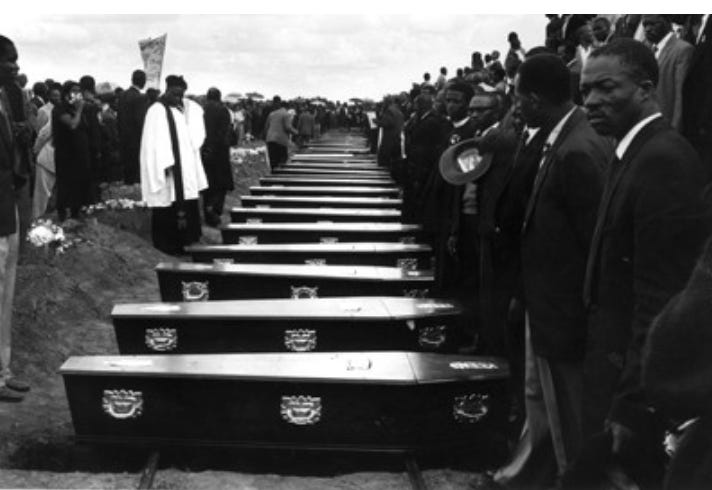
We mark these days on the principle of ‘never forget’. We honor the people who got up on those days not knowing that a simple act of protest would cost their lives.
Yet we forget.
We say “never again”.
Yet we repeat.
Today, suddenly, it seems that every day brings an atrocity. We consume the killings with our breakfast. Then get on with the day.
The atrocitaires (to invent a word), deranged sociopaths like Pete Hegseth, Netanyahu and Muhammad Hamdan Dagalo, aka Hemedti, commit mass murder with gay abandon.
They wear the badge of ‘war criminal’ with pride.
They are confident that justice is as broken as the bodies they obliterate.
Washington’s bullets and bombs fly again.
Faced with this barrage, those of us who are out of physical danger are nonetheless in danger of losing our souls. How do we not allow ourselves to think of this as normal?
Calling them out, as Arundathi Roy did recently, is an act of humanity. It shows we still have human feelings. I stand by the people.
Read and support: Drop Site News for some of the best reportage on America’s wars.
Solidarity, Memory and (preventing) Impunity
In South Africa too, we are in danger of forgetting.
In June it will be ten years since the deaths of 144 mental health care users evicted from Life Esidimeni commenced.
They were people. With names.
No prosecution.
Read: Vindication of the rights of those with mental illnesses to be people
It’s been eight years since 200 people died of Listeriosis caused by the proven negligence of Tiger Brands.
No accountability. No apology. No compensation.
Read: Tiger Brands has ‘moral responsibility’ to address needs of listeriosis victims urgently: lawyers
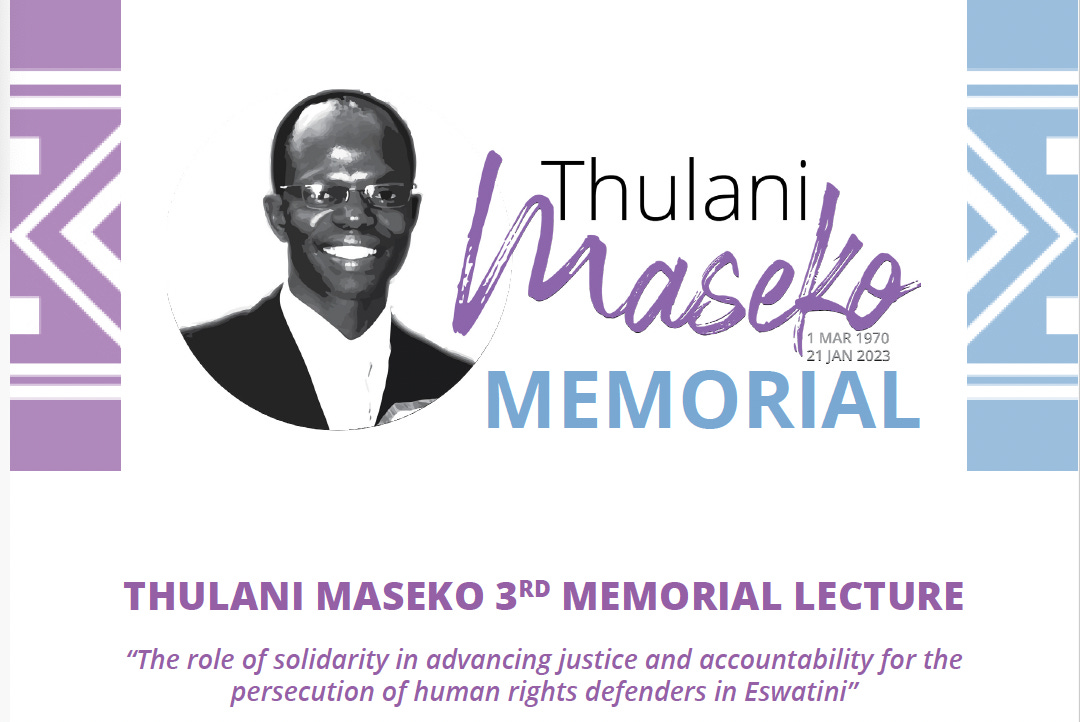
It’s now three years since the assassination of Swazi human rights lawyer Thulani Maseko.
No justice.
King Mswati III is still in his castle, now exchanging Mbabane’s dungeons for Washington dollars for poor souls ICED out of the USA.
Read: Who killed Swazi human rights lawyer Thulani Maseko?
As I asked in my keynote memorial lecture to honor Thulani: how do we practice solidarity in a time of impunity?
How do we insulate our souls against the erasure of outrage and emotion?
Paradoxically, it’s by keeping joy alive and present in our lives.
By remembering the value of life.
And what it means to have it taken away.
By being alive to pain.
Thumbs Up:
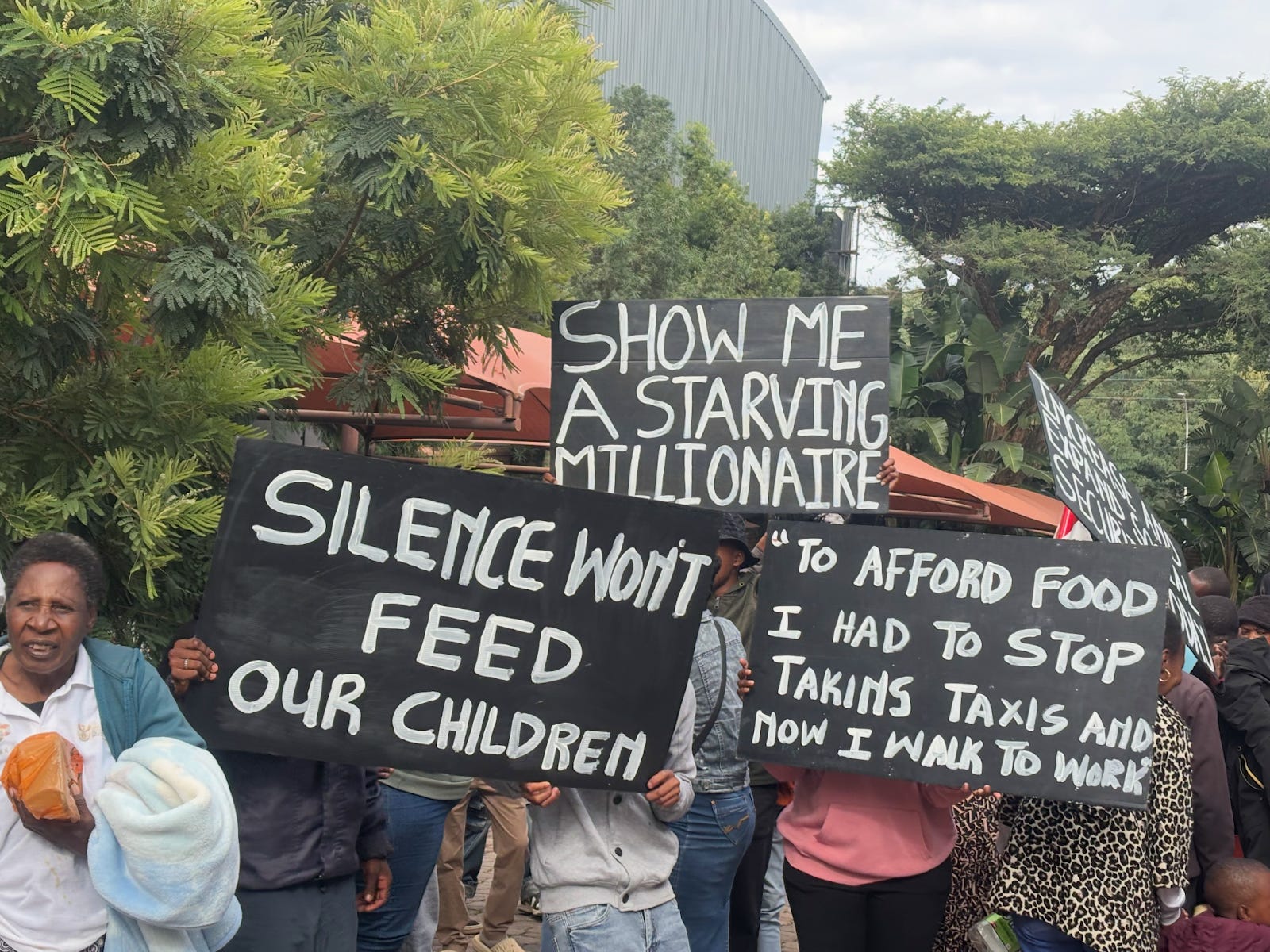
The South African Human Rights Commission (SAHRC) hunger hearings started on March 12. So far, eight Ministers have been summoned. Three have pitched.
Big Food, the hungermongers whose excessive pricing denies food to millions, stayed away, in contempt of the Constitution.
But SAHRC has found some mettle. Big Food have been subpoenaed to give evidence and answer pointed questions.
When the retailers do present themselves the Union Against Hunger will be there to greet them.
In international news: Trump is in trouble. But he will go out causing chaos, death and destruction. Deaths are rising. Fuel prices are rising. Food prices are rising.
In this context, it is highly likely that Trump will seek ways to suppress the US mid-term elections in November 2026.
But it’s not all bad news on the elections front. Where democracy survives, and where people organise, it still holds out the hope of putting people with hearts in positions of power.
In Nepal ex-rapper Balendra Shah is set to be Nepal PM after party’s landslide election win.
In England, The Economist recently declared ‘Britain’s class politics is back—with a Green twist’; read ‘We defeated the parties of billionaire donors’: Hannah Spencer’s victory speech | Green party
In Germany too the Green party is on the rise: ‘Bitter result’ for Friedrich Merz as Greens win in German car heartland
Activists bookshelf
“I can’t understand why humans destroy when they can create,” says the ghost of a Leopard to the ghost of Maali Almeida.
Take a trip down carnage lane.
Without design five of the books I have read recently have been about war, civil war and the brutality that comes with it.
Half of a Yellow Sun by Chimamanda Ngozi Adichie; Human Acts and We Do Not Part by Han Kang; Prophet Song by Paul Lynch (the 2024 Booker prize winner); and The Seven Moons of Maali Almeida by Shehan Karunatilaka (the 2022 Booker prize winner).
The theatres of war may change. So too may the times. But war’s underlying themes do not. The poor always pay.
The war-mongers always get off scot-free;
… and when it’s all over nothing’s resolved anyway.
These books, however, introduce us to the humans living through war. How life and love goes on.
And how it doesn’t.
During the Biafran war in Nigeria in the 1960s (Adichie’s subject) and the civil war in Sri Lanka in 1990 (Karunatilaka’s) the faraway Beatles are a soundtrack in faraway colonies, evidence that whilst colonised societies are torn apart by divisions seeded by the colonisers, life goes on is the in the imperial nations.
What’s changes?
Human Acts and Seven Moons are both told by the dead. Maali Almeida, the main character in Seven Moons, has a wonderful mal de vivre, the gallows humour of the gallowed.
Yet what shines through each book is the indomitable human spirit.
Listen: Bob Dylan Talkin’ World War III Blues (Live at Carnegie Hall, New York, NY - 1963)
Journalists unusual: Ufrieda Ho
Ufrieda Ho is gone.
But her spirit lingers on and on.
Read: Goodbye Ufrieda Ho, keeper of Jozi and wordsmith of the people
Ufrieda was an activists’ journalists’ journalist. She understood the urgency and often life-threatening nature of the issues we drew to her attention. She worked with speed. But she never sacrificed thoroughness of journalistic ethics and integrity for urgency.
Ufrieda was (com)passionate and principled, but didn’t wear her beliefs in justice on her sleeve. She just practiced them in her craft.
In the South African health sector (you can find many of her articles here), Ufrieda was trusted by the vulnerable people she interviewed. She had empathy. But she always sought to give the transgressors a voice to explain their misdeeds.
Last year I worked with Ufrieda on writing stories about community activism. There I saw a different part of her: her love and joy in community, her free spirit … a bit of her dreams.
Read one of Ufrieda’s last articles: Three small ideas that had beautiful outcomes
I didn’t know she was ill with cancer.
I’m so sorry now that I didn’t join the monthly ‘full moon walk’ she invited me to in late 2025.
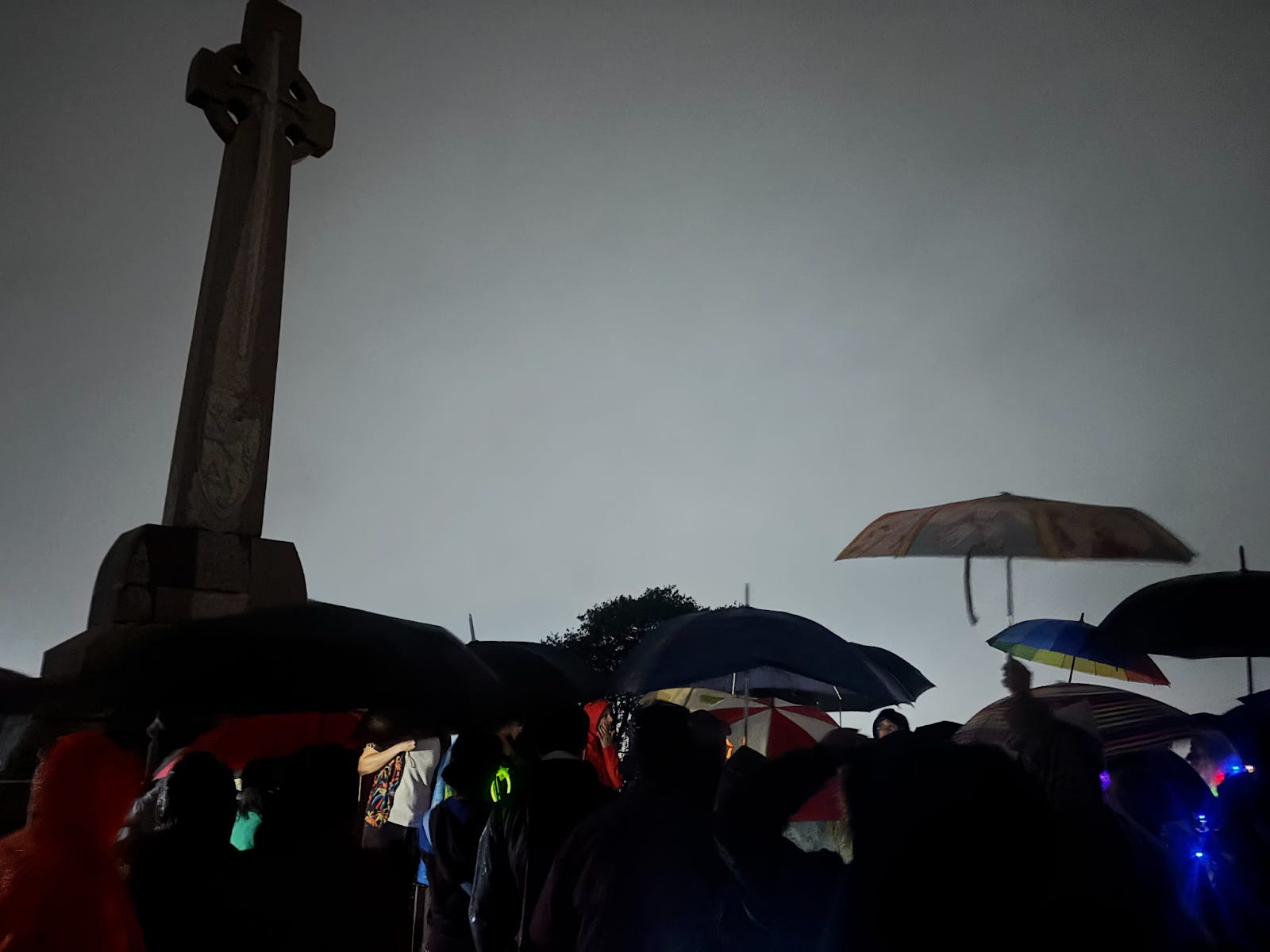
Instead on a cloudy wet night, with the full moon in hiding, Human Rights Day, I joined it with her friends to celebrate her life.
There’s a lesson there. Love your friends, while you can. They may not be here tomorrow.
May the road rise with you - parting thoughts on joy
Talking about joy and where to find it.
Most Saturday mornings along with +- 460,000 other people around the world I do a parkrun.
It invariably offers what the poet Gerard Manley Hopkins, 200 years ago, termed “inscape”. Rare, sudden, momentary flashes of beauty, seen either in people or nature.
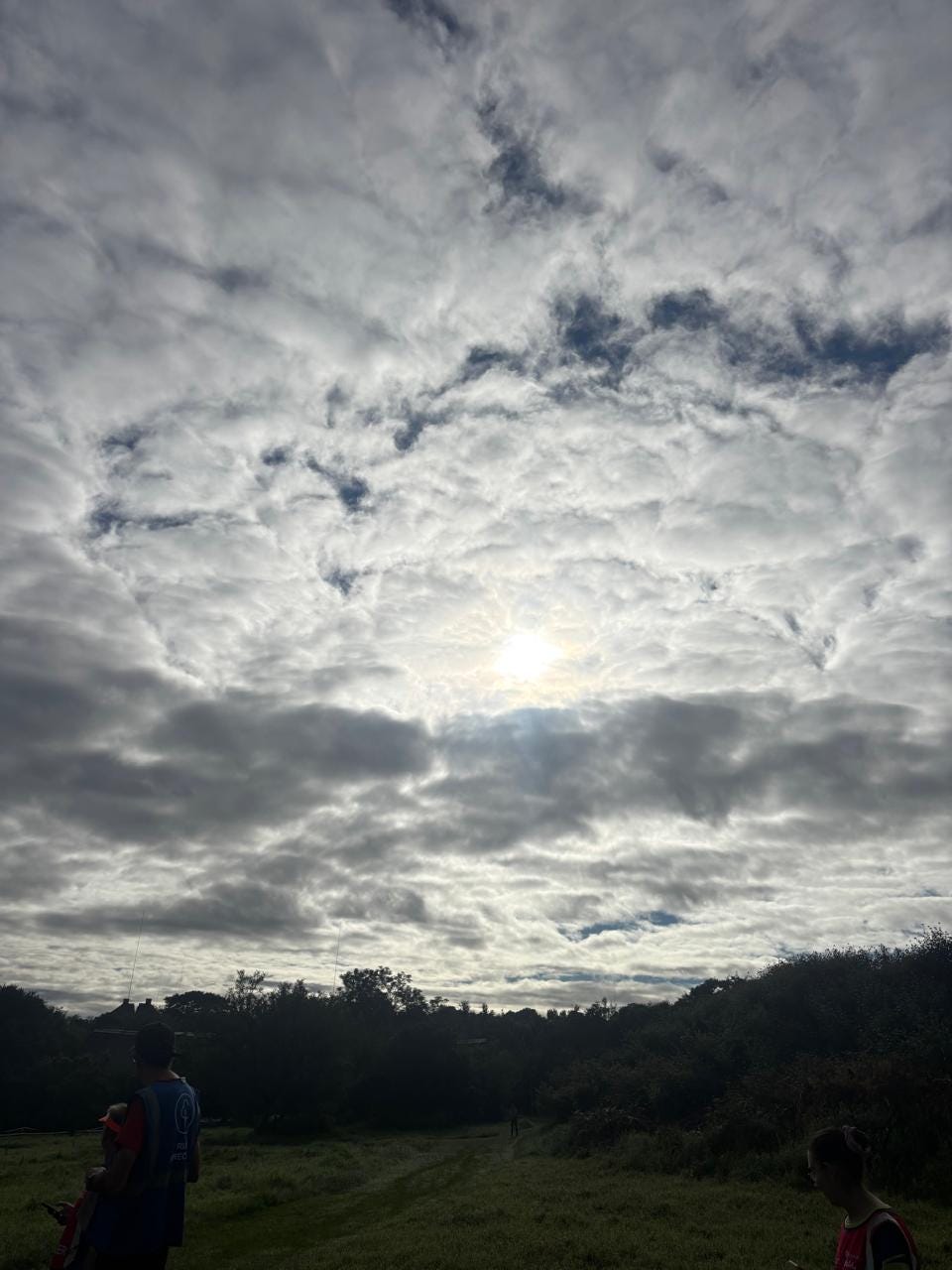
Like this skyscape.
Or, sometimes an idea prized loose and suddenly falling into thought with clarity.
Or, whilst driving to the parkrun, the algorithm that throws up a song that speaks miraculously to the moment. As it did when it put Rise on the turntable, a song by Public Image Limited (PiL), a band led by Johnny Rotten, one of my favourite disruptors and soothsayers:
They put a hot wire to my head
‘Cause of the things I did and said
They made these feelings go away
A model citizen in every way
The chorus of Rise, which according to Lydon is inspired by the murder of Steve Biko, is “Anger is an energy”.
True. But too much anger is an enemy.
Joy is an antidote.
Take joy when it comes. But never forget.
Connect.
Listen: People’s Faces by Kae Tempset.
Read: ‘We want change but not like this’: Iranians describe daily life under air attack.
Pause.
Feel empathy and love for people being rained on by bombs and black rain.
Notice other people’s faces.
Find ways to protest and show solidarity, because – however we express dissent – it’s a sign we are alive.
Love and Peace,

Mark
Heywood
The Justice and Activism Hub is a change tank for a time of change. We are committed to strengthening social justice struggles through connection, collaboration, coordination, convening and catalysing.
News from JAH is also now available here on Substack! The playlist of songs that I feature is available here. If you enjoyed this newsletter please forward it to other soul rebels. You can also contact me at markjamesheywood@gmail.com
Mark you always hit the nail on the head!
Mark you yourself are a joy. Thank you for writing so eloquently about some of the things that seem set on destroying us, and encouraging us to keep going. As Alice Walker says, "The Way Forward is with a Broken Heart".