
If you are the big tree
We are the small axe
Sharpened to cut you down
Ready to cut you down
- Bob Marley and the Wailers, Small Axe, Burnin’, 1973
Soul Rebels,
Now is the season of our discontent.
Or, as Queen Bey puts it in her American Requiem, “Now is the time to face the wind”.
For all the lawlessness of Autocracy Inc (a name coined by journalist Anne Appelbaum), for all the pain, suffering and death they are now inflicting on millions, the light of freedom will not be quenched.
Trump licenses attacks immigrants. Obersturmbannführer Stephen Miller executes. The Nazi punks in ICE implement. Timothy Snyder warns of “concentration camp labour.”
Ordinary people resist.
Everywhere.
So isn’t it a delicious irony when Zohran Mamdani, son of Mahmood Mamdani, a famous philosopher of post-colonialism and Mira Nair, a great director of Indian cinema, gets elected as the Democratic Party’s Mayoral candidate for New York City!
“I’m an alien, I’m a legal alien … I’m a socialist in New York”, to misquote Sting.
Mamdani’s victory came a day after I gave a lecture to Fellows of the Atlantic Fellows for Social and Economic Equity (AFSEE), on ‘Political Parties, Democracy and Social Movements’. I argued that, to put activists closer to inside-power, we need to develop innovative strategies to enter the party political arena, whilst maintaining our ideals, independence and accountability. The proof of the pudding came in the voting.
Background reading: Adam Tooze, Chartbook (394), dug up the data on the levels of wealth inequality in New York. Read his analysis here). The Meidastouch Network shared this post from UNFTR.
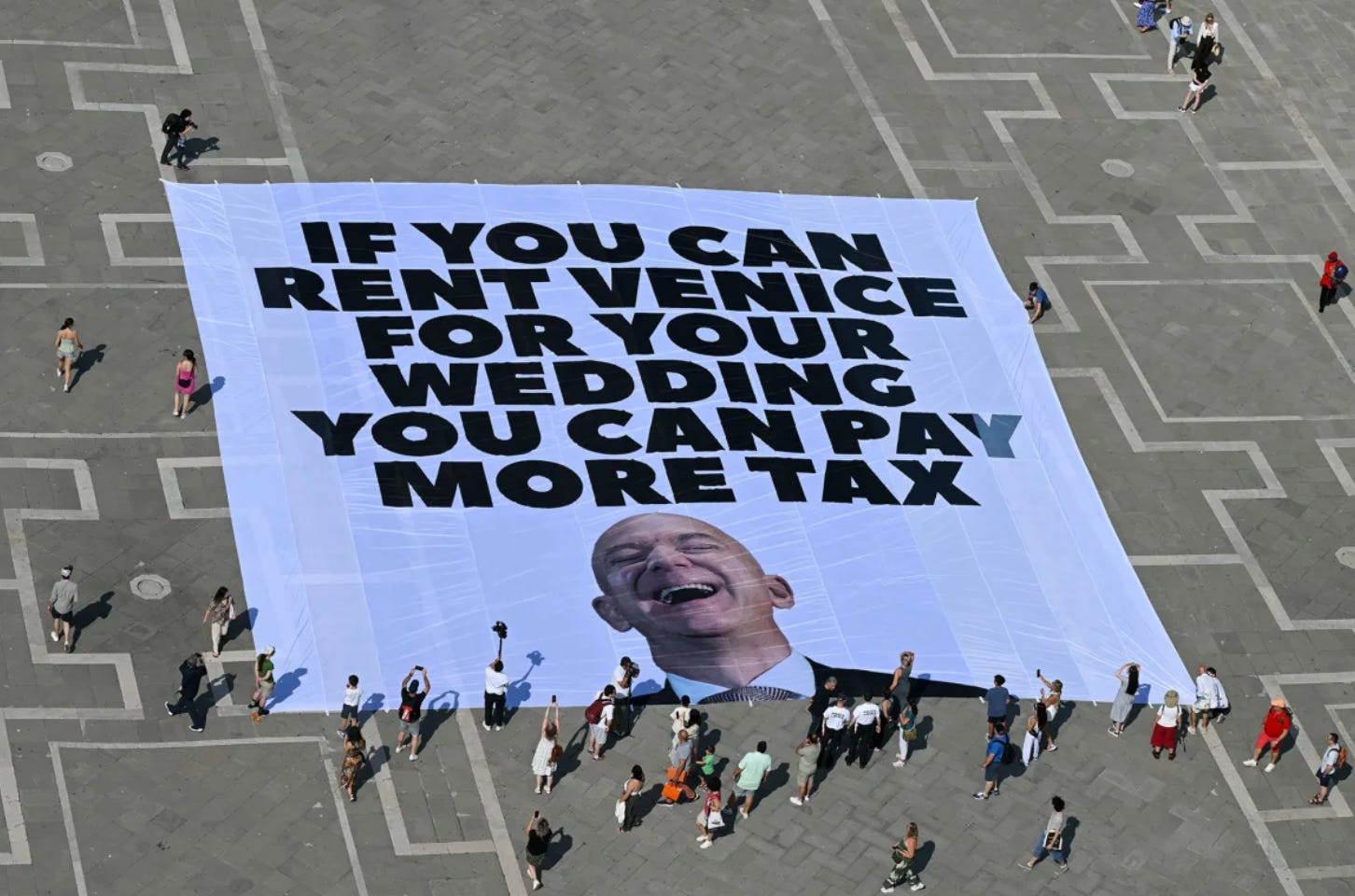
Meanwhile, in Hungary an estimated 200,000 people defied Victor Orban to participate in Pride. Over in Venice, activists used laughtivism to scorn Jeff Bezos’ wedding. Across Kenya, on June 25th, Gen Z took to the streets, again; and were met with murderous police brutality, again.
Thumbs Up: For peace and community
Organised xenophobia is rearing its cruel head again in South Africa, driven by Operation Dudula and political parties like ActionSA and the Patriotic Alliance.
These populists, pretending to care for the poor, incite poor people to attack other poor people, blaming them for conditions that have more to do with rich people’s tax evasion and corruption, than immigration.
Who’s really behind overcrowding in hospitals, crime and unemployment; African immigrants or austerity budgets and the ultra-rich who hoard wealth and evade taxes?
As usual, government, business and even the churches abdicate moral responsibility. But civil society is on hand.
Two years ago, during another bout of hatred, Kopanang Africa Against Xenophobia (KAAX), represented by the Socio-Economic Rights Institute of SA (SERI), initiated litigation to stop illegal intimidation and evictions by Dudula and seeking a court order that the police and other government departments to do their job and protect people.
SERI’s rich trove of court papers are here.
The case was argued in court two weeks ago
The following week SERI and Lawyers for Human Rights (LHR) had to close their offices because of online threats by Operation Dudula targeting staff at LHR and SERI.
KAAX will win in court. But court orders don’t often change minds. And these days the state often ignores them.
So, as I argued on this panel discussion on ENCA recently, there's a need to go back to communities to talk about xenophobia and to support local struggles for socio-economic rights like access to basic education, work, health care, food and water.
Thumbs down: The end of (US)aid
The US Agency for International Development (USAID) closed its doors on 30 June 2025. According to a study by The Lancet, reported in The Washington Post, USAID cuts may cause 14 million more deaths in the next five years.
Pause here and absorb that number. 🤔
Now the Global Fund on AIDS, TB and Malaria has announced cuts for over 100 countries, including a further R1,4bn for South Africa.
In Southern Africa excellent journalism by GroundUp and Spotlight, is showing the evidence that disruption to health services and death is mounting.
Mozambique: These are the children the United States left to die;
Death in Mozambique: After US funding cuts, a health system crumbles.
In South Africa our Minister of Health, Dr Aaron Motsoaledi, continues to downplay the impact of the cuts which, he says “only accounted for 17% of spending on HIV”.
Six months after the cuts were instituted activists claim that Government still has no plan to replace US HIV funding. They are demanding action and that the government make public its plans (if they exist).
Activists’ bookshelf: Books, books, everywhere …
I’ve just spent a few days in Oxford, England, the home of Oxford University. 40 years ago I studied there as an undergraduate. Because I’m no longer a student, I couldn’t go into the wondrous Bodelian library, a magnificent 17th century shrine for knowledge, with 13 million printed items.
Instead I worked from the cafe in Blackwells, opposite “the Bod”, one of the biggest bookshops in the world, with 250,000 different titles on its shelves.
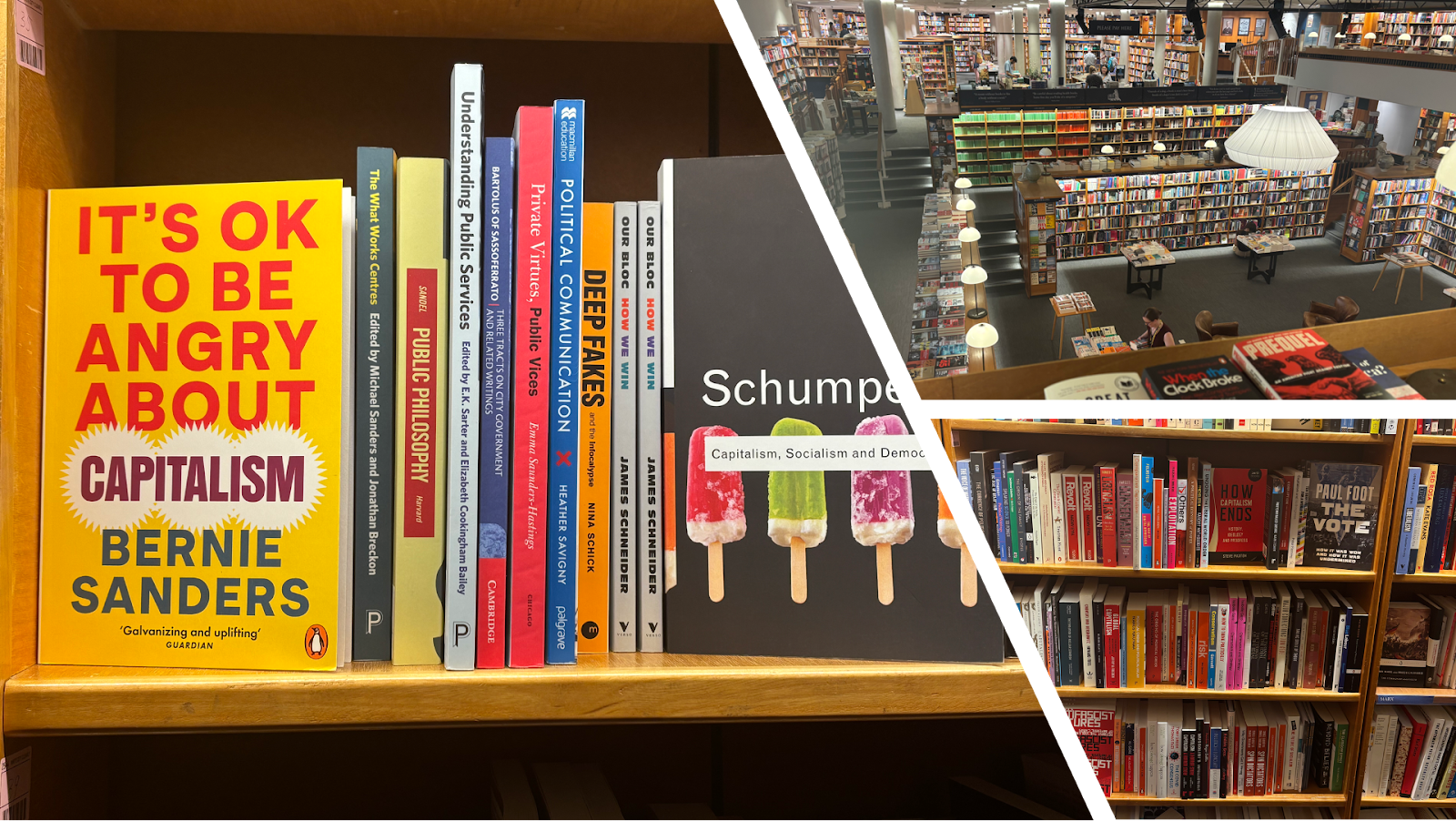
Inside Blackwells: Spotted: new non-fiction books by Philippe Sands (38 Londres Street: on Pinochet in England and a Nazi in Patagonia) and Quinn Slobodian (aptly titled, Hayek’s Bastards); coming-soon novels from Ian McEwan and Irvine Welsh, who has finally written a sequel to Trainspotting; and a book of Poetry for the Many, a collection compiled by Jeremy Corbyn.
As I wandered through the book forests, the depth and diversity of human knowledge and expression jumped out from the shelves. As novelist Elif Shafak never tires of explaining in Unmapped Storylands, her weekly newsletter, literature is perhaps the most miraculous and enduring of human inventions.
What struck me is the richness, quantity and quality of contemporary writing across the world; how relevant much of it is; how full of ideas, insights and power.
Going into Blackwells felt like entering a grotto of social solutions. A museum of the magical idea-potions that politicians and policy-makers mostly overlook. When elite humans have destroyed our species, aliens who discover the digital libraries that store all we wrote, will wonder at how much knowledge humans accumulated about their own civilization.
But how little they acted on their knowledge. “They wrote a lot in the End Times”, they will say.
I couldn’t help myself.
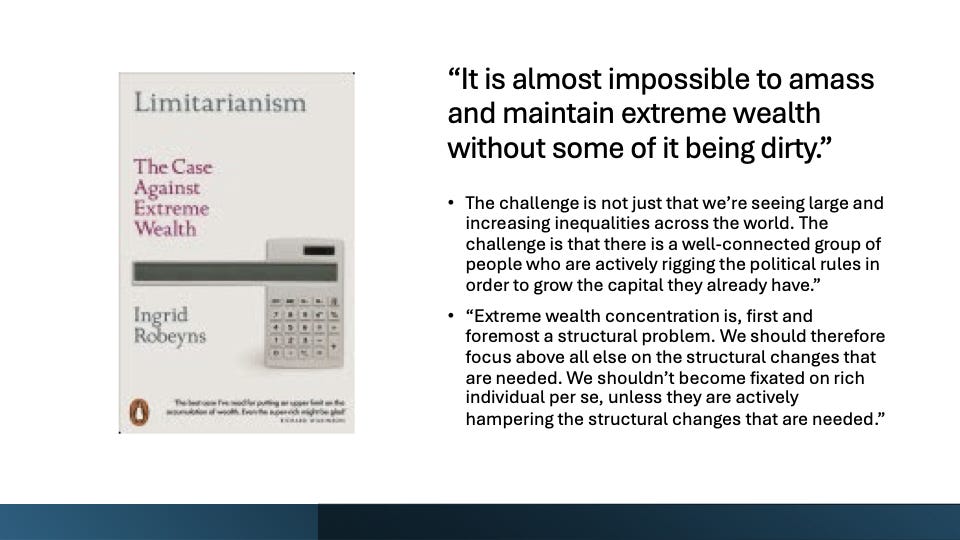
One of the books I bought is Limitarianism, a meticulously researched and referenced book on extreme wealth, where it comes from, why it’s mostly dirty money and its “corrosive effect on democracy”.
It’s full of facts, analysis and dot-joining. It makes a convincing case about why activists must focus as much on wealth as we do on poverty. It’s time for a measured evidence-based campaign against extreme wealth that helps make people aware of what is going on.
Ingrid Robeyns dedicates Limitarianism to “all activists who are fighting against injustice.” In this regard, I am troubled by how few social movement activists are abreast of this intellectual ferment, the ideas and evidence it is generating.
Writers of the world! Pay more attention to integrating your ideas into social justice movements.
Activists of the world! Pay more attention to ideas and solutions.
Saying “No” is not enough!
Activists Unusual: “Oh you pretty things”
Still on the theme of books.
Whilst in London I met Duncan Green, whose recently established blog, Activism, Influence and Change I recommend to social justice activists.
I wanted to talk to Duncan because although the world is rising in revolt against poverty and inequality, although the fightback against authoritarianism is on, although we win important battles, we are NOT winning the war. We need to rethink activism to win and hold power.
Duncan, with decades of hands-on experience all over the world, is a practitioner of informed activism. His book How Change Happens (available online, thank you), is a dialogue between practice and reflections, what Duncan says is his frustration at “seeing activists take steps that seem destined to fail.”
It’s about ‘Rethinking Our Approach to Change’ (the title of part 1 of the book).
After our chat in Brixton Market, Duncan walked me down Electric Avenue, the street that gave its name to the song by Eddy Grant. Grant successfully sued Trump for violating his copyright on the song when he used it in his 2020 election campaign.
Isn’t it wonderful how roads of resistance literally and metaphorically connect and intersect?
“We can be heroes”
Our walk ended at the beautiful mural of David Bowie who had spent a few of his childhood years in Brixton. After his death in 2012 the mural became a temporary shrine.
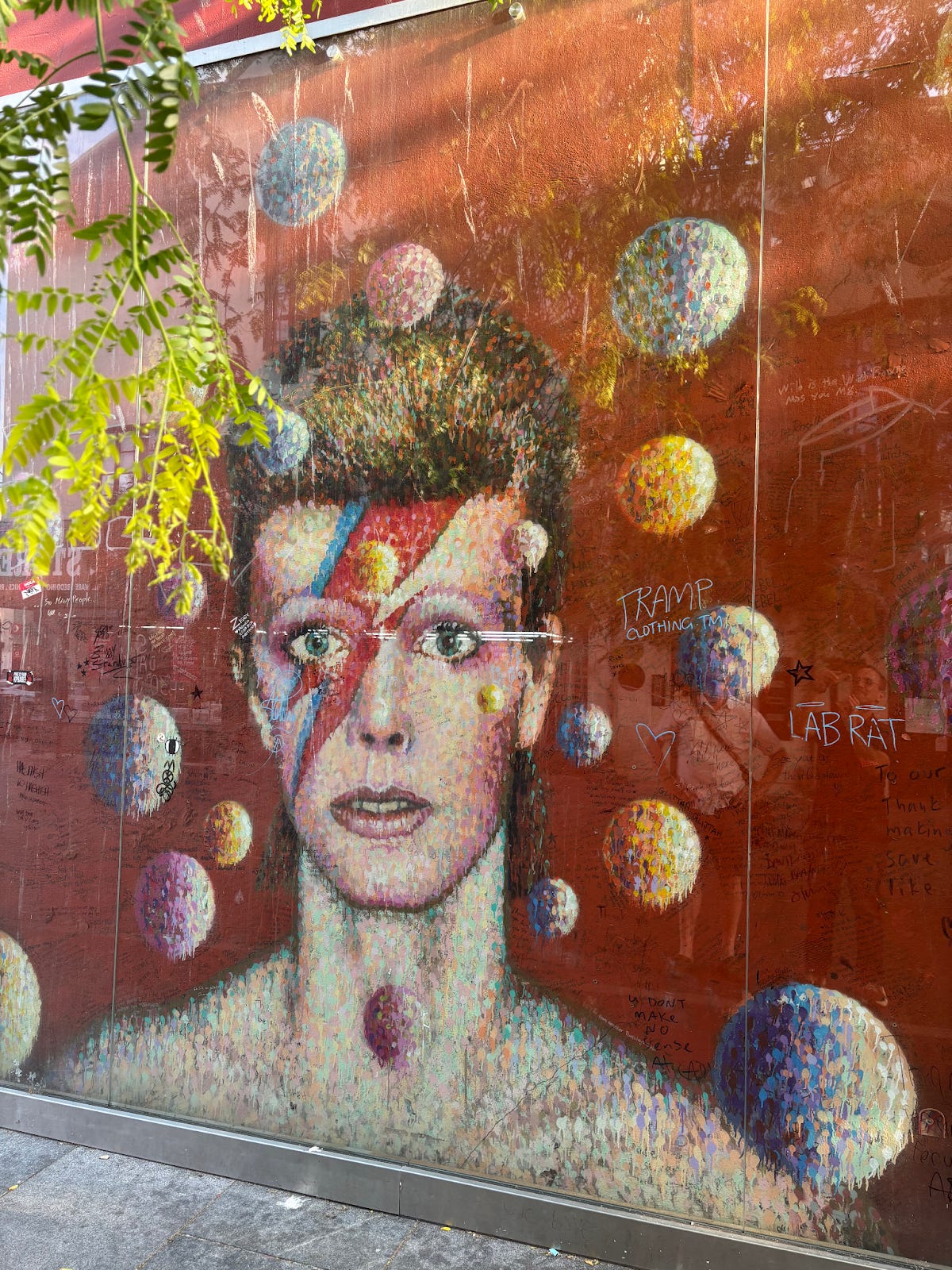
Bowie was not a seeker of social justice. But his alter ego, Ziggy Stardust, helped to free young people from the prison of class and gender, to dream, dress and be different, to escape. His lyrics have a timeless prescience.
“And these children that you spit on
As they try to change their worlds
Are immune to your consultations
They're quite aware of what they're goin' through…”
Brixton, in South London, is still a predominantly black Afro-Caribbean suburb. It’s famous for its uprisings and home to activists like Linton Kwesi Johnson (LKJ), whose poetry celebrated the rebellion of black youth.
I met LKJ briefly when he read his poetry at the Arts Alive festival in South Africa in the early 2000s.
LKJ had the rare distinction of breaking into the establishment with a collection of Selected Poems published by Penguin. The BBC Sounds retrospective on his life and writing, on the series This Cultural Life, is beautiful listening.
So, in honour of connections – people, revolt, poetry, learning and migrants – this edition of News from JAH signs off by encouraging you to listen to ‘If I Was a Tap Natch Poet’, a poem by LKJ, that celebrates people’s power and poetry and the South African revolution.
Love and peace,
Mark
Heywood
If you enjoyed this newsletter please forward it to other soul rebels. They can subscribe by contacting me at markjamesheywood@gmail.com
The Justice and Activism Hub is a change tank for a time of change. We are committed to strengthening social justice struggles through connection, collaboration, coordination, convening and catalysing.